7 Best DJ Mixers with XLR, Compared
As an Amazon Associate we earn from qualifying purchases. Links on this page are affiliate links.
Finding the best audio mixers with XLR requires looking at connectivity options and channel counts. We compared 7 models based on specifications published on their listings. The Yamaha MG10 10-Input Mixer leads because it offers ten inputs for analog mixing with dedicated hardware compression. Other options include the 16-channel Depensheng DX16 and several Pyle units with Bluetooth and USB. This guide helps you decide which mixer fits your specific setup needs.
Quick picks
The best fit for you
- You want tactile analog mixing with hardware compression Yamaha MG10 10-Input Mixer The Yamaha MG10 provides dedicated hardware compression and phantom-powered preamps for pure analog control.
- You need a compact solution for mobile DJ sets Pyle 6-Channel DJ Mixer with USB The Pyle PMX466 features a compact metal chassis weighing 3.84 pounds with Bluetooth and XLR inputs.
- You require high channel counts for fixed installations Depensheng DX16 16-Channel Audio Mixer The Depensheng DX16 offers 16 channels and phantom power, fitting fixed installations despite its 11.8-pound weight.
- You need six XLR inputs with Bluetooth connectivity Pyle 8-Channel Audio Mixer with Bluetooth The Pyle PMX648 provides six XLR inputs and Bluetooth for versatile analog and digital integration.
Our 7 picks

Yamaha MG10 10-Input Mixer
Best for: analog mixing with dedicated hardware compression
- Connectivity
- XLR (what this guide is about)
- Channel Count
- 10-Channel
- Mixer Type
- Stereo Mixer
- Channel Equalizer
- 3-band EQ
- Phantom Power
- Plus-48V
- Intended Use
- Professionals, Live Performances
View on Amazon: Yamaha MG10 10-Input Mixer Affiliate link
This analog unit gives you 10 input channels, discrete class-A preamps, and plus-48V phantom power for condenser microphones over XLR. You also get three-band channel equalization and one-knob compressors to manage your dynamic range without complex menus. Encased in a metal chassis weighing 4.19 pounds, it suits performers who prioritize tactile analog control over internal digital processing.
Pros
- Ten input channels with XLR connectivity
- Class-A D-PRE microphone preamps with plus-48V phantom power
- Three-band EQ and high-pass filters
- Dedicated one-knob analog compressors
Cons
- Lacks integrated USB audio interface functionality
- No built-in digital effects processing
- No Bluetooth wireless audio streaming
Good fit if
- You need 10 inputs with discrete preamps and XLR connectivity.
- You want physical 1-knob compressors and 3-band channel EQ.
- You prefer a metal chassis for standalone live routing.
Skip if
- You need a direct USB connection to record into a computer.
- You require onboard digital reverb or delay effects.
- You plan to stream audio wirelessly using Bluetooth.
Verdict: Yamaha 10-Channel Stereo Mixer with XLR delivers tactile hardware mixing with phantom-powered preamps to performers who do not require integrated USB recording or effects.

Depensheng DX16 16-Channel Audio Mixer
Best for: High-channel-count fixed installations
- Connectivity
- USB, XLR, RCA (what this guide is about)
- Channel Count
- 16
- Mixer Type
- Analog
- Phantom Power
- 48V
- Channels
- 16-Channel
- Intended Use
- Professionals, Beginners, Recording
View on Amazon: Depensheng DX16 16-Channel Audio Mixer Affiliate link
This 16-channel mixer supports XLR, USB, and RCA connections. It includes phantom power for microphones and Bluetooth streaming. The unit measures 25 by 13.4 inches and weighs 11.8 pounds. You get a 3-band EQ per channel and LED level meters. It suits DJ events and live gigs where multiple inputs are necessary.
Pros
- 16-channel input capacity
- XLR inputs with +48V phantom power
- Built-in Bluetooth wireless streaming
- USB connectivity for computer recording
Cons
- Large 25-inch width requires significant desk space
- Heavy 11.8-pound build reduces portability
- No dedicated display screen for channel settings
Good fit if
- You need to mix 16 separate audio sources
- You require phantom power for studio microphones
- You want wireless Bluetooth music streaming
Skip if
- You need a compact portable mixer
- You only require a few microphone inputs
- You prefer a lightweight travel device
Verdict: Depensheng DX16 16-Channel Audio Mixer fits users who need high channel counts and phantom power. It is a heavy, wide unit best for fixed installations rather than mobile DJ sets.
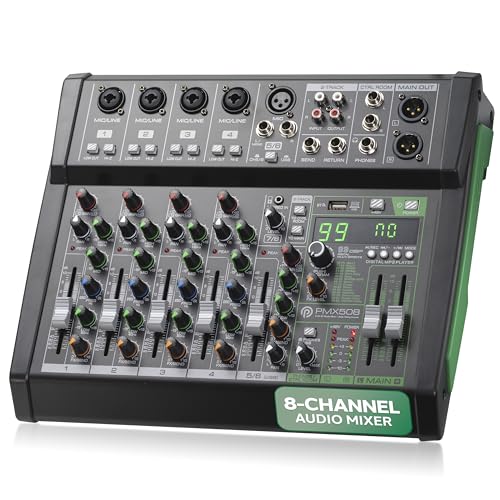
Pyle PMX508 8-Channel Bluetooth Mixer
Best for: Small live setups with Bluetooth needs
- Connectivity
- Bluetooth, USB, XLR (what this guide is about)
- Channels
- 8-Channel
- Features
- Effects, MP3 Player
- Intended Use
- Recording
- Mixer Type
- Digital
- Included Accessories
- Microphone
View on Amazon: Pyle PMX508 8-Channel Bluetooth Mixer Affiliate link
The Pyle 8-Channel Audio Mixer offers four XLR combo inputs for microphones and instruments. It includes Bluetooth 5.0 for wireless streaming and a USB port for MP3 playback and recording. DSP effects provide echo, reverb, and delay options. An LED display shows track info and level meters. This unit is designed for live events, studio sessions, or DJ setups where wired connectivity and basic digital effects are needed.
Pros
- Four XLR combo inputs for microphones
- Bluetooth 5.0 wireless streaming capability
- USB port for MP3 playback and recording
- DSP effects including echo and reverb
- LED digital display with level indicators
Cons
- Only four XLR inputs compared to other mixers
- No dedicated headphone output listed in specifications
- Included microphone is a single accessory, not a full kit
Good fit if
- You need four XLR inputs for live vocal or instrument use
- You want wireless audio streaming via Bluetooth
- You require basic DSP effects for sound shaping
Skip if
- You need more than four XLR inputs
- You require dedicated headphone monitoring outputs
- You prefer analog-only signal paths without digital effects
Verdict: The Pyle 8-Channel Audio Mixer fits users who need four XLR inputs and Bluetooth connectivity for small-scale live or studio applications.

Pyle 12-Channel Bluetooth USB Audio Mixer
Best for: Live sound and studio recording setups
- Connectivity
- Bluetooth, USB, XLR (what this guide is about)
- Channel Count
- 12
- Mixer Type
- Console Style
- USB Audio Interface
- USB soundcard and audio interface
- Built-In Effects
- 16 DSP Effects
- Channel Equalizer
- 7-Band EQ
View on Amazon: Pyle 12-Channel Bluetooth USB Audio Mixer Affiliate link
This 12-channel console mixer provides eight XLR combo inputs for microphones and instruments. It includes +48V phantom power for condenser mics and a USB audio interface for computer recording. The unit features Bluetooth streaming, a 7-band EQ per channel, and 16 built-in DSP effects. Its 12-segment LED metering helps you monitor levels during live sets or studio sessions.
Pros
- Eight XLR combo inputs for versatile connectivity
- +48V phantom power for condenser microphones
- USB audio interface for PC and Mac recording
- 16 built-in DSP effects for sound shaping
- Bluetooth wireless streaming capability
Cons
- Large footprint at 12.6 inches wide and 21.4 inches tall
- Heavy build at 10.6 pounds
- No dedicated display screen for parameter adjustment
Good fit if
- You need multiple XLR inputs for live vocals and instruments
- You want to record directly to a computer via USB
- You require phantom power for studio condenser mics
Skip if
- You need a compact mixer for small stages
- You prefer a lightweight unit for frequent travel
- You require digital control via a mobile app
Verdict: Pyle 12-Channel Audio Mixer offers extensive connectivity and phantom power for users needing a robust, feature-rich mixing solution. It suits those prioritizing input count and recording capabilities over portability.

Pyle 6-Channel DJ Mixer with USB
Best for: compact mobile DJ setups
- Connectivity
- Bluetooth, USB Audio Interface, USB, XLR, AUX (what this guide is about)
- Channel Count
- 6
- Mixer Type
- DJ Audio Mixer
- USB Audio Interface
- USB Interface
- Built-In Effects
- Preset 16 Digital Effects
- Channels
- 6-Channel
View on Amazon: Pyle 6-Channel DJ Mixer with USB Affiliate link
This Pyle mixer offers six input channels with XLR connectivity for professional microphones. It includes a USB audio interface and Bluetooth for wireless playback. The unit features 16 preset digital effects and a built-in sub output. Its metal chassis provides durability for mobile DJs or small venues. You get included accessories like a microphone, making it a ready-to-use solution for live sound.
Pros
- Six input channels with XLR connectivity
- Built-in USB audio interface
- 16 preset digital effects
- Metal chassis construction
- Includes a microphone
Cons
- Only six channels compared to larger consoles
- No dedicated display screen for settings
- Limited to preset effects without custom editing
Good fit if
- You need a compact mixer for live vocals
- You want Bluetooth playback without extra cables
- You prefer a metal build for durability
Skip if
- You require more than six input channels
- You need advanced DSP customization
- You prefer a console-style layout
Verdict: Pyle 6-Channel Bluetooth Audio Mixer fits mobile performers who need XLR inputs and Bluetooth in a compact, metal chassis. It suits those who value simplicity over complex routing.

Pyle 8-Channel Audio Mixer with Bluetooth
Best for: Users needing six XLR inputs and Bluetooth
- Connectivity
- Bluetooth, USB, XLR (what this guide is about)
- Channel Count
- 8
- Built-In Effects
- 380 DSP effects
- Channel Equalizer
- 2-Band EQ
- Phantom Power
- +48V
- Channels
- 8-Channel
View on Amazon: Pyle 8-Channel Audio Mixer with Bluetooth Affiliate link
The Pyle PMX648 is an 8-channel mixer with six XLR combo inputs for microphones and line-level sources. It includes built-in Bluetooth and USB connectivity for digital audio playback. The unit features a DSP with 380 preset effects and +48V phantom power for condenser microphones. Its chassis combines plastic and metal construction. This mixer suits users who need multiple input options and wireless connectivity for live performance or recording setups.
Pros
- Six XLR combo inputs for flexible mic and line connections
- Built-in Bluetooth and USB ports for digital audio playback
- DSP processor with 380 preset sound effects
- +48V phantom power for condenser microphones
- Independent channel controls for volume, balance, and EQ
Cons
- Plastic and metal chassis may feel less durable than all-metal competitors
- Limited to 380 preset effects with no user-editable parameters
- No dedicated software editor for effect customization
Good fit if
- You need six XLR inputs for multiple microphones
- You want wireless Bluetooth playback without extra adapters
- You prefer a mixer with built-in digital effects
Skip if
- You require a dedicated software editor for effects
- You need a fully metal chassis for heavy touring
- You want more than six XLR inputs
Verdict: Pyle 8-Channel Bluetooth Audio Mixer offers six XLR inputs and Bluetooth connectivity for users needing versatile analog and digital integration. It fits performers who prioritize built-in effects and wireless playback over premium build materials.
Pyle 8-Channel USB Mixer with Bluetooth
Best for: Multi-mic setups with recording needs
- Connectivity
- Bluetooth, USB, XLR (what this guide is about)
- Channel Count
- 8
- Mixer Type
- Console Style
- USB Audio Interface
- USB soundcard and audio interface
- Built-In Effects
- 16 DSP Effects
- Channel Equalizer
- 7-Band EQ
View on Amazon: Pyle 8-Channel USB Mixer with Bluetooth Affiliate link
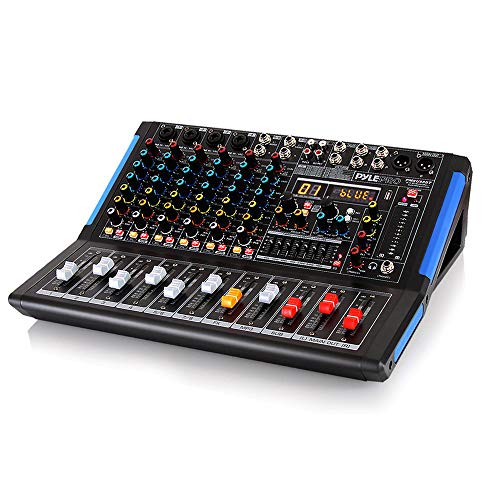
This is an 8-channel console-style audio mixer with four XLR inputs. It includes +48V phantom power for condenser microphones and a 7-band equalizer per channel. The unit features built-in Bluetooth for wireless streaming and a USB audio interface for PC recording. It also provides 16 DSP effects. This mixer suits users needing multiple mic inputs and digital connectivity in a single unit.
Pros
- Four XLR inputs with +48V phantom power
- 7-band EQ on each channel
- Built-in Bluetooth for wireless audio streaming
- USB audio interface for PC recording
- 16 DSP effects included
Cons
- Heavier build at 8.38 pounds
- Larger footprint than compact mixers
- No dedicated display screen for settings
Good fit if
- You need four XLR inputs for multiple microphones
- You want to record audio directly to a computer via USB
- You require phantom power for studio microphones
Skip if
- You prefer a lightweight, portable mixer
- You do not need Bluetooth connectivity
- You want a mixer with fewer than eight channels
Verdict: Pyle 8-Channel Console Mixer offers four XLR inputs and phantom power for users who need to connect multiple microphones. The USB interface and Bluetooth add flexibility for recording and wireless streaming.
Specifications side by side
| Spec | Yamaha MG10 10-Input Mixer | Depensheng DX16 16-Channel Audio Mixer | Pyle PMX508 8-Channel Bluetooth Mixer | Pyle 12-Channel Bluetooth USB Audio Mixer | Pyle 6-Channel DJ Mixer with USB | Pyle 8-Channel Audio Mixer with Bluetooth | Pyle 8-Channel USB Mixer with Bluetooth |
|---|---|---|---|---|---|---|---|
| Channel Count | 10-Channel | 16 | not stated | 12 | 6 | 8 | 8 |
| Mixer Type | Stereo Mixer | Analog | not stated | Console Style | DJ Audio Mixer | not stated | Console Style |
| USB Audio Interface | not stated | not stated | not stated | USB soundcard and audio interface | USB Interface | not stated | USB soundcard and audio interface |
| Built-In Effects | not stated | not stated | not stated | 16 DSP Effects | Preset 16 Digital Effects | 380 DSP effects | 16 DSP Effects |
| Channel Equalizer | 3-band EQ | not stated | not stated | 7-Band EQ | not stated | 2-Band EQ | 7-Band EQ |
| Auxiliary Sends | not stated | not stated | not stated | 1/4'' Send + Return inputs | not stated | not stated | 1/4'' Send + Return |
| Phantom Power | Plus-48V | 48V | not stated | +48V Phantom | not stated | +48V | +48V |
| Channels | not stated | 16-Channel | 8-Channel | 12-Channel | 6-Channel | 8-Channel | 8-Channel |
| Connectivity | XLR | USB, XLR, RCA | Bluetooth, USB, XLR | Bluetooth, USB, XLR | Bluetooth, USB Audio Interface, USB, XLR, AUX | Bluetooth, USB, XLR | Bluetooth, USB, XLR |
| Features | not stated | not stated | Effects, MP3 Player | Effects, MP3 Player | Effects, MP3 Player | Effects, MP3 Player | Effects, MP3 Player |
| Intended Use | Professionals, Live Performances | Professionals, Beginners, Recording | Recording | not stated | Professionals | Professionals, Recording | not stated |
| Included Accessories | not stated | Microphone | Microphone | not stated | Microphone | Microphone | not stated |
| Dimensions | 15.7 × 5.2 × 14.2 inches | 13.4 × 25 × 1.46 inches | 10.4 × 11 × 2.9 inches | 3.67 × 12.6 × 21.4 inches | 11.2 × 9.06 × 2.17 inches | 15 × 17.6 × 4.45 inches | 3.67 × 12.6 × 16.4 inches |
| Weight | 4.19 pounds | 11.8 pounds | not stated | 10.6 pounds | 3.84 pounds | not stated | 8.38 pounds |
| Size | 10-Input | not stated | 8 Channel | 12 Channel | Pack of 1 | 8 | 8 Channel |
| Color | Black | not stated | Black | Black | not stated | not stated | Black |
| Model | MG10 | DX16 - 16 Channel Audio Mixer | PMX508 | PMXU128BT | PMX466 | PMX648 | PMXU88BT |
If you route balanced outputs to separate power stages, you can compare the best amplifiers with XLR by input specs.
How to Choose the Right XLR Mixer
-
Check Physical Dimensions
Measure your available space before buying. The Depensheng DX16 is 25 inches wide, making it unsuitable for tight desks. The Yamaha MG10 is narrower at 5.2 inches. The Pyle PMX466 measures 9.06 inches wide. Ensure the width and length fit your table. Height matters if you stack gear. Check the specs for width and length to avoid buying a unit that does not fit your current setup.
-
Evaluate Weight for Transport
If you move your gear, weight is critical. The Depensheng DX16 weighs 11.8 pounds. It is heavy for frequent travel. The Yamaha MG10 is lighter at 4.19 pounds. The Pyle PMX466 weighs 3.84 pounds. Lighter units are easier to carry to gigs. Heavier units may offer more stability but are harder to transport. Compare the weight specs to find a balance between durability and portability for your needs.
-
Count Your Inputs
Match the channel count to your sources. The Yamaha MG10 has ten inputs. The Depensheng DX16 offers sixteen channels. The Pyle PMX466 has six channels. More inputs allow more microphones or instruments. Fewer inputs keep the mixer compact. Check the channel count in the specs. Choose a number that covers your maximum setup without excess controls you will never use.
-
Verify Connectivity Options
Ensure the mixer connects to your devices. The Pyle PMX466 includes Bluetooth, USB, and XLR. The Yamaha MG10 focuses on XLR. The Depensheng DX16 adds RCA. Bluetooth allows wireless audio streaming. USB can serve as an audio interface. Check the connectivity list in the specs. Match these ports to your speakers, computer, and wireless devices to ensure full compatibility.
-
Assess Intended Use
Select a mixer for your specific scenario. The Depensheng DX16 suits fixed installations. The Pyle PMX466 fits mobile DJ sets. The Yamaha MG10 is for analog mixing. Fixed installations prioritize channel count. Mobile sets prioritize portability. Analog mixing prioritizes tactile control. Check the intended use or best-for notes. Align the mixer design with your primary performance environment to ensure it meets your workflow requirements.
Frequently asked questions
Can I use these XLR mixers for live DJ sets?
Yes, several models fit mobile performers. The Pyle PMX466 is a compact metal chassis weighing 3.84 pounds, designed for mobile use. It includes Bluetooth and XLR inputs. Other units like the Depensheng DX16 are heavy and wide, making them better for fixed installations rather than transport.
Do these mixers include USB connectivity for recording?
Most models on this list support digital integration. The Pyle PMX466 acts as a USB audio interface. The Depensheng DX16 and Pyle PMXU128BT also offer USB connections. This allows you to connect to computers for recording or streaming audio directly from the mixer to your DAW software.
Which mixer is best for connecting multiple microphones?
The Yamaha MG10 is ideal for multi-mic setups. It provides ten inputs with phantom-powered preamps, which is essential for condenser microphones. The Pyle PMXU88BT also offers four XLR inputs with phantom power, making it suitable for users who need to connect several microphones simultaneously for live events.
Is Bluetooth connectivity available on these XLR mixers?
Yes, many models include wireless playback features. The Pyle PMX508, PMXU128BT, PMX466, and PMX648 all feature Bluetooth. This allows you to stream music from your phone or tablet directly into the mix. It is useful for background tracks or quick wireless audio integration during performances.
How much space does a 16-channel mixer take?
Large channel counts require significant desk space. The Depensheng DX16 is 25 inches wide and weighs 11.8 pounds. It is best suited for fixed installations where portability is not a concern. Smaller options like the Yamaha MG10 are only 5.2 inches wide, fitting easily on standard DJ desks.
Do these mixers have built-in effects?
Several Pyle models include digital effects processing. The PMX508, PMXU128BT, PMX466, and PMX648 all list effects as a feature. They also include MP3 player functionality. This allows you to apply audio processing or play back digital files without needing external hardware or software plugins during your set.