Choosing DJ Mixers in 2026: The Specs That Matter and 8 Picks
As an Amazon Associate we earn from qualifying purchases. Links on this page are affiliate links.
This audio mixer buying guide helps you select the right hardware for your specific needs. You will decide between analog and digital options, compare channel counts, and evaluate connectivity features like USB and Bluetooth. The products listed here were chosen strictly from their published specifications. We focus on practical details that matter for your setup, such as weight, dimensions, and built-in effects.
You can choose from eight models that range from compact units for podcasting to heavy-duty mixers for live stages. Each option serves a distinct purpose, whether you need phantom power, wireless streaming, or simple analog control. By reviewing these specs, you can match a device to your workflow without guessing. This guide walks you through the key decisions so you can find a mixer that fits your space and performance style.
Our top pick: Yamaha 16-Channel Mixer with SPX Effects.
Key Specs for Choosing Mixers
Channel count and inputs
The number of input channels determines how many sources you can mix simultaneously. A 4-channel mixer suits solo podcasters or small DJ sets, while 16-channel models handle complex live bands or studio recordings. Higher channel counts require more rack space and power. You must match the count to your actual source needs to avoid clutter. For example, the Yamaha MG16XU offers sixteen inputs for heavy-duty analog mixing. In contrast, the W In-mix TC-4 provides four channels for compact mobile use. Choose based on your maximum simultaneous inputs.
- Total input channels
- Mic and line inputs
- Expansion capabilities
Connectivity options
Connectivity defines how you link devices and record audio. USB interfaces allow direct computer recording and digital control. Bluetooth enables wireless streaming from phones or tablets. XLR inputs support professional microphones. You need to verify which connections match your workflow. The Mackie ProFX10v3 includes both USB and Bluetooth for versatile recording. The Pyle PMX508 adds XLR for microphone integration. Ensure your mixer supports the cables and protocols you already own or plan to buy.
- USB audio interface support
- Bluetooth wireless streaming
- XLR mic inputs
Built-in effects
Integrated effects processors add value by removing the need for external hardware. Common effects include reverb, delay, and digital signal processing. These features enhance live performances and recordings without extra gear. You should check if the effects are simple or complex. The Yamaha MG06X includes digital effects in a compact frame. The Tenlamp G10 bundle offers built-in effects for podcasting. Verify the type and quality of effects to ensure they meet your creative needs.
- Type of DSP effects
- Number of effect presets
- Real-time control knobs
Physical size and weight
Dimensions and weight impact portability and setup space. Compact mixers fit in bags for mobile DJs or podcasters. Larger units offer more controls but require stable surfaces. You must measure your available space before purchasing. The W In-mix TC-4 is lightweight and small for mobile use. The Yamaha MG16XU is larger and heavier for studio permanence. Consider how often you transport the mixer and where it will sit during use.
- Width, height, and depth
- Total unit weight
- Form factor classification
Phantom power availability
Phantom power supplies electricity to condenser microphones. This feature is essential if you use professional studio mics. Not all mixers provide this voltage on all channels. You must check the specifications for 48V phantom power support. The Depusheng DX12 and W In-mix TC-4 both offer phantom power. The Pyle PMX508 also includes this feature. Verify that your microphones require phantom power and that the mixer delivers it reliably.
- 48V phantom power switch
- Number of phantom channels
- Mic type compatibility
Intended use category
Mixers are often designed for specific applications like recording, karaoke, or live performances. This categorization affects feature prioritization and durability. Recording-focused mixers emphasize clean preamps and USB output. Live performance mixers prioritize robustness and quick access. The Mackie ProFX10v3 is intended for recording. The Depusheng DX12 suits professional or karaoke use. Align the mixer category with your primary activity to ensure optimal performance.
- Primary use case label
- Professional vs consumer grade
- Specific application features
Types of Audio Mixers
High-Channel Analog Mixers
These units prioritize physical input count for complex setups. The Yamaha MG16XU offers 16 inputs with USB audio interface capabilities. It suits studios or stages where durability and channel count matter more than wireless features. You get heavy-duty analog mixing without digital controls. The trade-off is size and weight. At 15 pounds and over 20 inches long, it requires dedicated rack space. You sacrifice portability for the ability to handle multiple simultaneous sources like microphones and instruments.
Compact Digital Mixers
Digital mixers integrate effects and Bluetooth for wireless streaming. The Pyle PMX508 is an 8-channel example with built-in MP3 player support. It fits small DJ setups needing Bluetooth streaming. You gain connectivity options like XLR inputs and USB recording in a compact steel frame. The trade-off is reduced physical fader count compared to analog giants. You get essential DSP effects and wireless input flexibility. This type suits performers who prioritize wireless streaming and compact size over extensive physical input channels.
Portable USB Mixers
These mixers focus on USB connectivity for direct computer recording. The Mackie ProFX10v3 provides 10 channels with Bluetooth and USB audio interface features. It is a practical choice for musicians needing reliable recording and simple effects. You get clean preamps and digital control flexibility. The trade-off is that some models list conflicting channel counts in specs. You prioritize clean audio paths and USB connectivity. This type fits users who need straightforward analog-to-digital conversion for home studio or small gig recordings.
Podcast & Streaming Bundles
Bundled mixers include microphones for immediate use. The Tenlamp G10 is a portable option designed for solo podcasters and streamers. It values portability and built-in effects over complex routing. You get a complete solution in a small frame measuring 10.9 inches long. The trade-off is limited channel expansion capabilities. You sacrifice multi-source mixing for ease of setup. This type suits creators who need a single-unit solution for voice recording and live streaming without additional hardware purchases.
Avoid These Mixer Selection Mistakes
Ignoring USB audio interface support
Assuming all USB connections support audio. Some ports only charge devices or transfer data. You must verify the specifications list audio interface capabilities. Without this feature, the mixer cannot stream sound to your computer for recording or live performance.
Relying on Bluetooth for monitoring
Overlooking Bluetooth latency for monitoring. Wireless audio introduces delay, which disrupts your timing and beatmatching. Check if the specs mention low-latency modes. If not, rely on wired headphones for precise monitoring during your live sets and mixing sessions.
Mismatching input types with gear
Mismatching input types with your gear. XLR inputs require microphones, while line inputs suit controllers. Using the wrong port causes distortion or no signal. Review the input specifications carefully. Match your source output to the correct mixer input type.
Forgetting headphone cueing features
Neglecting headphone cueing capabilities. You need independent monitoring to prep tracks. Ensure the specs list a dedicated cue output. Without this feature, you cannot hear the next track privately. Proper cueing is essential for smooth transitions during your performance.
Choosing excessive channel counts
Assuming channel count equals usability. More inputs do not always mean better workflow. Complex setups can slow you down. Stick to the number of channels you actually use. Simpler mixers often provide faster access to essential controls during live sets.
Quick picks
Our 8 picks

Yamaha 16-Channel Mixer with SPX Effects
Best for: High channel count analog mixing with USB
- Channel Count
- 16
- USB Audio Interface
- USB
- Built-In Effects
- SPX digital effects
- Channel Equalizer
- 3-band
- Connectivity
- USB Audio Interface, USB
- Dimensions
- 20.6 × 8.39 × 22 inches
The Yamaha MG16XU is a 16-channel analog mixer with USB audio interface capabilities and built-in SPX digital effects. It features studio-grade D-PRE preamps and 3-band EQ with high-pass filters for precise tone shaping. The 1-knob compressors help control dynamics. This unit suits users needing a robust, impact-resistant metal chassis for multi-source mixing in studio or live settings.
Pros
- 16 input channels for extensive connectivity
- Studio-grade D-PRE preamps for clean signal
- Built-in SPX digital effects processor
- USB audio interface for recording
- 1-knob compressors for easy dynamics control
Cons
- No Bluetooth connectivity for wireless streaming
- No digital touchscreen interface
- Heavy 15-pound build limits portability
Good fit if
- You need to mix 16 different audio sources
- You require reliable USB recording to a computer
- You want durable metal construction for frequent use
Skip if
- You need wireless Bluetooth audio streaming
- You prefer a lightweight portable unit under 10 pounds
- You require a fully digital touchscreen interface
Verdict: Yamaha MG16XU 16-Input Analog Mixer is a heavy-duty option for users who need many inputs and USB recording without digital controls. It fits studios or stages where durability and channel count matter more than wireless features.
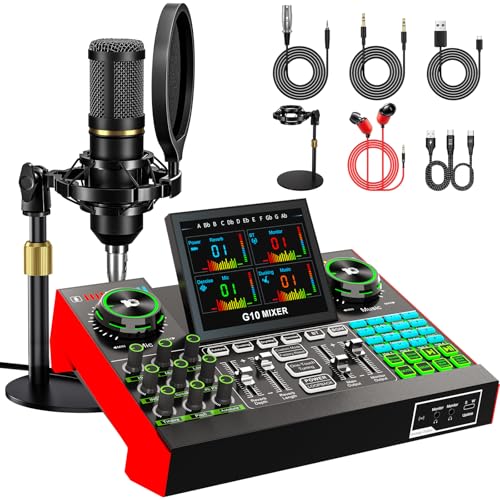
Tenlamp Podcast Audio Mixer Bundle
Best for: portable podcasting and live streaming
- Built-In Effects
- 16 built-in sound effects
- Phantom Power
- 48V
- Connectivity
- Bluetooth
- Intended Use
- Professionals
- Included Accessories
- Microphone
- Dimensions
- 10.9 × 2.28 × 7.67 inches
The Tenlamp G10 is a compact audio mixer designed for podcasters and streamers. It features 48V phantom power for condenser microphones and 16 built-in sound effects. The unit includes a built-in battery for portable use. It supports noise reduction and voice changing. This bundle includes a 3.5mm microphone. It suits creators needing an all-in-one mixing solution for live streaming or recording.
Pros
- 48V phantom power for professional condenser mics
- Built-in battery for portable operation
- 16 customizable sound effects and voice changers
- Advanced noise reduction technology
Cons
- Limited to 3.5mm and 6.35mm dynamic mic inputs
- No USB audio interface capability for direct PC recording
- Small form factor limits physical control surface size
Good fit if
- You need a portable mixer with a built-in battery
- You want built-in sound effects and voice changing
- You use 3.5mm or 6.35mm dynamic microphones
Skip if
- You require a USB audio interface for computer recording
- You need multiple XLR inputs for a large team
- You prefer a standard desktop mixer with extensive routing
Verdict: The Tenlamp G10 Portable Audio Mixer is a solid choice for solo podcasters and streamers who value portability and built-in effects over complex routing options.
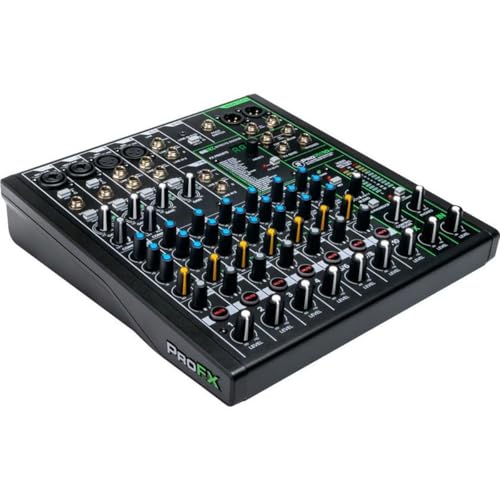
Mackie ProFX 10-Channel USB Mixer
Best for: Small gigs and USB recording
- Channel Count
- 10-channel
- Mixer Type
- Analog
- USB Audio Interface
- USB interface
- Built-In Effects
- 24 effects
- Connectivity
- Bluetooth, USB
- Intended Use
- Recording
The Mackie ProFX10v3 is a 10-channel audio mixer designed for small live gigs and streaming. It features Onyx preamps for clean mic gain and a built-in USB interface for direct recording. The GigFX engine provides 24 effects to enhance your sound. With Bluetooth connectivity and a compact footprint, it handles multiple inputs efficiently. This unit suits users needing a straightforward, reliable mixer for recording and small performances without complex routing.
Pros
- 10 input channels for versatile connectivity
- Onyx preamps deliver studio-grade gain
- Built-in USB audio interface for recording
- 24 GigFX effects for sound shaping
- Bluetooth connectivity for wireless playback
Cons
- Limited to 24 built-in effects
- No dedicated display for parameter editing
- Non-digital signal processing limits recall
Good fit if
- You need a simple mixer for small gigs
- You require USB recording capabilities
- You want Bluetooth playback support
Skip if
- You need more than 10 channels
- You require digital mixing features
- You need extensive preset recall
Verdict: Mackie ProFX10v3 10-Channel USB Mixer is a practical choice for musicians who need reliable recording and simple effects. It fits users who prioritize clean preamps and USB connectivity over complex digital control.

Yamaha 6-Channel Compact Mixer with Effects
Best for: Small setups needing basic analog mixing
- Channel Count
- 6
- Mixer Type
- Analog
- Built-In Effects
- Digital Effects
- Form Factor
- Compact
- Dimensions
- 5.87 × 7.95 × 2.44 inches
- Weight
- 1.98 pounds
The Yamaha MG06X is a 6-channel analog mixer designed for compact setups. It features two microphone preamps and four dedicated stereo line channels. Built-in digital effects allow for quick sound shaping. Its small footprint, measuring 7.95 by 5.87 inches, fits easily on tight desks. This unit suits users who need a straightforward, space-saving solution for basic mixing tasks without complex routing.
Pros
- 6-channel analog configuration with 2 mic preamps
- 4 dedicated stereo line channels for multiple sources
- Built-in digital effects for sound processing
- Compact dimensions of 7.95 x 5.87 x 2.44 inches
- Lightweight build at 1.98 pounds
Cons
- Only 6 total channels limit input capacity
- No USB audio interface capability for computer recording
- No Bluetooth connectivity for wireless streaming
Good fit if
- You need a small mixer for a few sources
- You require built-in digital effects for live sound
- You want a lightweight unit for portable use
Skip if
- You need to record audio directly to a computer via USB
- You require more than 6 input channels
- You want wireless Bluetooth audio streaming
Verdict: Yamaha MG06X 6-Input Compact Mixer provides essential analog mixing and digital effects in a small frame. It fits users who prioritize portability and basic functionality over digital connectivity and high channel counts.

Pyle 8-Channel USB Audio Mixer with Bluetooth
Best for: Wireless streaming and phantom power needs
- Channel Count
- 8 Channel
- Mixer Type
- DJ Mixer
- USB Audio Interface
- Audio Interface
- Built-In Effects
- 16Bit DSP Processor
- Channel Equalizer
- 3-band EQ
- Phantom Power
- +48V
View on Amazon: Pyle 8-Channel USB Audio Mixer with Bluetooth
This Pyle mixer offers eight channels with 3-band EQ and +48V phantom power for microphones. It includes DSP effects and a USB audio interface for recording. Bluetooth allows wireless streaming from smartphones. The steel chassis is built for durability. It suits DJs or live performers needing a compact, versatile unit with wireless connectivity and basic processing tools.
Pros
- 8 channels with 3-band EQ per channel
- +48V phantom power for condenser microphones
- Bluetooth wireless audio streaming capability
- USB audio interface for computer recording
- Built-in DSP effects processor
Cons
- No touchscreen or digital display for visual feedback
- No built-in WiFi connectivity
- Requires external power adapter for operation
Good fit if
- You need wireless Bluetooth streaming for background music
- You require phantom power for studio microphones
- You want a compact steel chassis for portability
Skip if
- You need a digital touchscreen interface
- You require WiFi connectivity for network control
- You need more than 8 input channels
Verdict: Pyle 8-Channel DJ Mixer with Bluetooth is a solid choice for performers who prioritize wireless streaming and phantom power in a compact steel frame. It fits users who need basic DSP effects and USB recording without complex digital controls.

Depusheng 12-Channel Bluetooth Audio Mixer
Best for: Users needing phantom power and Bluetooth input
- Channel Count
- 12
- USB Audio Interface
- USB Audio Interface
- Phantom Power
- 48V
- Channels
- 12-Channel
- Connectivity
- Bluetooth, USB
- Features
- MP3 Player, 48V Phantom Power
This 12-channel mixer offers extensive connectivity for live sound and studio work. It includes Bluetooth, USB audio interface capabilities, and 48V phantom power for condenser microphones. The unit features a 3-band EQ on every channel and LED level meters. Its compact, thin chassis fits tight spaces, making it suitable for portable setups or small venues requiring multiple input sources.
Pros
- 12 input channels with XLR and 1/4-inch jacks
- Bluetooth and USB connectivity for digital streaming
- 48V phantom power for professional microphones
- 3-band EQ and LED peak indicators on all channels
Cons
- Weighs 11.4 pounds, adding bulk to transport
- No dedicated remote control or mobile app listed
- No built-in digital effects processor mentioned
Good fit if
- You need phantom power for condenser mics
- You require Bluetooth input for wireless streaming
- You want a thin chassis for tight spaces
Skip if
- You need built-in digital effects
- You require a lightweight portable unit
- You want app-based control
Verdict: Depusheng 12-Channel Audio Mixer provides essential connectivity for users needing phantom power and Bluetooth input in a compact form. It suits those prioritizing channel count and basic analog control over digital features.
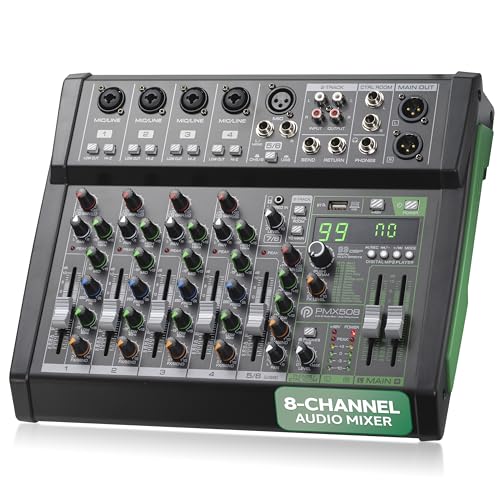
Pyle PMX508 8-Channel Bluetooth Mixer
Best for: Compact DJ setups needing Bluetooth streaming
- Channels
- 8-Channel
- Connectivity
- Bluetooth, USB, XLR
- Features
- Effects, MP3 Player
- Intended Use
- Recording
- Mixer Type
- Digital
- Included Accessories
- Microphone
The Pyle PMX508 is an 8-channel mixer designed for DJ setups and studio recording. It features four XLR combo inputs with +48V phantom power for condenser microphones. You get Bluetooth 5.0 streaming and USB support for MP3 and WAV files. The unit includes DSP effects like echo and reverb. Its compact 11-inch width fits tight desktop spaces. This mixer suits users who need wireless connectivity and digital effects in a portable package.
Pros
- Four XLR combo inputs with +48V phantom power
- Bluetooth 5.0 for wireless audio streaming
- USB port supports MP3 and WAV playback
- Built-in DSP effects including echo and reverb
- LED digital display for track and level info
Cons
- Only four XLR inputs limit microphone count
- No dedicated headphone cue mix control listed
- Physical buttons required for MP3 player control
Good fit if
- You need Bluetooth streaming for background music
- You require phantom power for studio microphones
- You want DSP effects for vocal processing
Skip if
- You need more than four microphone inputs
- You require a dedicated headphone cue mix
- You prefer a larger format for live stages
Verdict: The Pyle 8-Channel Audio Mixer with Bluetooth offers essential connectivity for small DJ setups. It fits users who prioritize wireless streaming and compact size over extensive input channels.

W In-mix 4-Channel USB Audio Mixer
Best for: small live venues and podcasting
- Channel Count
- 4
- Built-In Effects
- 256 DSP effects
- Channel Equalizer
- 3-band EQ, 7-band stereo graphic EQ
- Phantom Power
- 48V
- Channels
- 4-Channel
- Connectivity
- Bluetooth, USB
The W In-mix TC-4 is a compact 4-channel audio mixer designed for live performance and recording. It features 48V phantom power for condenser microphones and 256 built-in DSP effects. You can stream backing tracks via Bluetooth 5.0 or record directly to a USB drive. The unit includes a 7-band stereo graphic EQ for precise sound shaping. This model suits small venues, podcasters, and mobile DJs who need a portable, all-in-one signal processor.
Pros
- 48V phantom power for professional condenser microphones
- 256 preset DSP effects for vocals and instruments
- Bluetooth 5.0 and USB MP3 playback support
- 7-band stereo graphic EQ for room tuning
Cons
- Only 4 input channels limit complex setups
- No computer interface for DAW recording
- Lacks a dedicated remote control unit
Good fit if
- You need phantom power for studio microphones
- You want built-in effects without extra gear
- You require Bluetooth streaming for backing tracks
Skip if
- You need more than 4 input channels
- You require computer-based recording via USB
- You need a large format mixing console
Verdict: The W In-mix TC-4 4-Channel Mixer fits mobile DJs and podcasters who need compact size with integrated effects and phantom power.
Specifications side by side
| Spec | Yamaha 16-Channel Mixer with SPX Effects | Tenlamp Podcast Audio Mixer Bundle | Mackie ProFX 10-Channel USB Mixer | Yamaha 6-Channel Compact Mixer with Effects | Pyle 8-Channel USB Audio Mixer with Bluetooth | Depusheng 12-Channel Bluetooth Audio Mixer | Pyle PMX508 8-Channel Bluetooth Mixer | W In-mix 4-Channel USB Audio Mixer |
|---|---|---|---|---|---|---|---|---|
| Channel Count | 16 | not specified | 10-channel | 6 | 8 Channel | 12 | not specified | 4 |
| Mixer Type | not specified | not specified | Analog | Analog | DJ Mixer | not specified | not specified | not specified |
| USB Audio Interface | USB | not specified | USB interface | not specified | Audio Interface | USB Audio Interface | not specified | not specified |
| Built-In Effects | SPX digital effects | 16 built-in sound effects | 24 effects | Digital Effects | 16Bit DSP Processor | not specified | not specified | 256 DSP effects |
| Channel Equalizer | 3-band | not specified | not specified | not specified | 3-band EQ | not specified | not specified | 3-band EQ, 7-band stereo graphic EQ |
| Phantom Power | not specified | 48V | not specified | not specified | +48V | 48V | not specified | 48V |
| Channels | not specified | not specified | 10-Channel | not specified | 8-Channel | 12-Channel | 8-Channel | 4-Channel |
| Connectivity | USB Audio Interface, USB | Bluetooth | Bluetooth, USB | not specified | Bluetooth, USB Audio Interface, USB | Bluetooth, USB | Bluetooth, USB, XLR | Bluetooth, USB |
| Form Factor | not specified | not specified | not specified | Compact | not specified | not specified | not specified | not specified |
| Features | Effects | not specified | Effects | Effects | Effects, MP3 Player, 48V Phantom Power | MP3 Player, 48V Phantom Power | Effects, MP3 Player | MP3 Player, 48V Phantom Power |
| Intended Use | not specified | Professionals | Recording | not specified | not specified | Karaoke, Professionals | Recording | Karaoke, Live Performances, Recording |
| Included Accessories | not specified | Microphone | not specified | not specified | not specified | not specified | Microphone | not specified |
| Dimensions | 20.6 × 8.39 × 22 inches | 10.9 × 2.28 × 7.67 inches | 10.7 × 11.9 × 3.3 inches | 5.87 × 7.95 × 2.44 inches | 2.56 × 10.8 × 9.26 inches | 19.8 × 20 × 0.14 inches | 10.4 × 11 × 2.9 inches | 10 × 3.74 × 12.4 inches |
| Weight | 15 pounds | not specified | 1 pounds | 1.98 pounds | 3.97 pounds | 11.4 pounds | not specified | not specified |
| Size | 16-Input | not specified | 16-channel | 6-Input | 8 Channel | not specified | 8 Channel | not specified |
| Color | Black | not specified | Black | Black | Black | not specified | Black | not specified |
| Model | MG16XU | G10+MIC | ProFX16v3 | MG06X | PMXU83BT | DX12 - 12 Channel Audio Mixer | PMX508 | TC--4 |
Frequently asked questions
Which audio mixer is best for podcasting?
The Tenlamp G10 is a solid choice for solo podcasters and streamers. It prioritizes portability and includes a microphone in the bundle. This compact unit features built-in effects, making it easier to produce clean audio without complex routing options or heavy hardware.
Do I need phantom power for my microphone?
You need phantom power if you use condenser microphones. Several options in this list provide 48V phantom power, including the Depusheng DX12 and the W In-mix TC-4. This feature supplies the necessary voltage for studio-quality mics to function correctly during recording or live performance.
Can I connect my mixer to a computer via USB?
Yes, most modern mixers include USB audio interface capabilities. The Yamaha MG16XU, Mackie ProFX10v3, and Pyle PMXU83BT all support USB connectivity for recording. Verify the specs list audio interface features to ensure the mixer can stream sound to your computer for digital workflows.
Which mixer supports Bluetooth for wireless streaming?
Several models feature Bluetooth connectivity for wireless audio input. The Mackie ProFX10v3, Pyle PMXU83BT, Depusheng DX12, and Pyle PMX508 all include Bluetooth. This allows you to stream music from phones or tablets directly into the mix without needing additional cables or adapters.
What is the smallest audio mixer available?
The Tenlamp G10 is highly portable with compact dimensions. It measures 2.28 inches in width and 10.9 inches in length. This small form factor suits mobile DJs or podcasters who need a lightweight unit that fits easily into a bag for on-the-go use.
How many channels do I need for a small setup?
A 4-channel or 6-channel mixer is sufficient for small setups. The W In-mix TC-4 offers four channels, while the Yamaha MG06X provides six inputs. These compact models handle basic analog mixing and digital effects, making them ideal for solo performers or small live venues.
Which mixer is best for high channel count needs?
The Yamaha MG16XU is a heavy-duty option with 16 inputs. It is designed for users who need many inputs and USB recording without digital controls. This model fits studios or stages where durability and high channel count matter more than wireless features or compact size.