System Type in DJ Controllers: What It Is and Is It Worth It?
As an Amazon Associate we earn from qualifying purchases. Links on this page are affiliate links.
Understanding System Type in DJ Controllers
System type explained clarifies how a DJ controller processes audio and manages software. This spec defines the hardware architecture and determines whether the device relies on an external computer or operates independently. You will encounter two main categories in this niche: Standalone and All-in-One. Each category offers distinct operational workflows and connectivity options.
A Standalone controller functions without a laptop. These units contain internal processors, storage, and operating systems. They run DJ software directly on the hardware. You connect speakers or mixers via line outputs. This setup reduces dependency on a computer. It also eliminates potential software crashes or compatibility issues associated with external systems. The device acts as a complete music player and mixer. You load tracks via USB drives or cloud services directly into the unit. This is ideal for mobile DJs who need quick setup and teardown.
An All-in-One controller typically refers to units that combine mixing and playback functions but still require a computer for core software operation. However, some manufacturers use this term to describe hybrid devices. These units may offer limited standalone features while primarily functioning as MIDI controllers. You must check the specific product data to understand the exact capabilities. The distinction matters because it affects your gear requirements and performance reliability.
Buyers care about this spec because it dictates portability and workflow. If you travel frequently, a Standalone option reduces the weight and complexity of your kit. You do not need to carry a laptop or worry about battery life on a computer. If you prefer advanced software features and extensive library management, an All-in-One or traditional controller connected to a PC might suit you better. Review the published specifications carefully. Look for mentions of internal storage, operating systems, and connectivity ports. This information helps you determine if the hardware matches your performance needs and technical preferences.
Standalone vs All-in-One Systems
Standalone
A standalone controller processes audio and manages software internally. You do not need to connect a laptop or tablet. The device runs its own operating system. This setup reduces cable clutter and eliminates software crashes caused by your computer. The ADJ WMX1 Mk2 is a compact example that prioritizes tactile buttons over screens. It weighs 2.36 pounds and measures 10 inches long. You get portability without external dependencies. However, standalone units often lack the deep library management of a full desktop. You may need to transfer files via USB. The Denon DJ SC LIVE 4 offers streaming but remains a self-contained unit. You trade software flexibility for hardware reliability. This is ideal for mobile DJs who want a quick, plug-and-play workflow. The trade-off is typically higher upfront cost for the integrated hardware.
All-in-One
An all-in-one system combines the controller and the player into a single unit. It usually includes built-in screens and media players. You still connect external speakers and mixers. The Pioneer DJ XDJ-RX3 is a robust example that fits club-standard workflows. It weighs 21 pounds and measures 28.7 inches wide. This form factor offers a familiar layout for many performers. The AlphaTheta XDJ-AN provides touchscreen control in a compact 20-pound chassis. You get integrated media playback without a computer. However, these units are often heavier and larger. The Reloop Mixtour Pro is a portable exception at 2.11 pounds. It supports four-deck software control. You gain convenience but lose the modularity of separate components. If you move gear frequently, the weight can be a factor. This type suits those who want a complete system in one box.
Is It Worth The Upgrade
Who needs it
You need this spec if you perform live sets without a laptop. Standalone units handle all audio processing and software management internally. This means you skip the USB connection to a computer entirely. You avoid software crashes that often happen when your laptop freezes or updates unexpectedly. The setup is cleaner with fewer cables to manage on stage. You can start mixing faster because the device boots up independently. If you value reliability and portability, this architecture is essential. You can carry just the controller and a drive for your music library. There is no dependency on external computing power. This independence allows you to focus on your performance rather than troubleshooting technical issues with your computer. It is ideal for mobile DJs who move between venues frequently.
Who can skip it
You can ignore this spec if you already use a laptop for your sets. All-in-One controllers are designed to work with software on your computer. They rely on your machine for processing power and library management. If you prefer using Serato or Rekordbox on a desktop, a standalone unit adds unnecessary cost and complexity. You do not need internal processing if your laptop is powerful enough. Prioritize connectivity options like MIDI mapping and pad responsiveness instead. Focus on build quality and controller ergonomics. These factors affect your performance more than system architecture. If you are comfortable managing cables and software updates, the extra cost of standalone features is not justified. Stick to traditional controllers that integrate seamlessly with your existing workflow. Your current setup likely already meets your needs without the standalone premium.
System Type Glossary
Standalone Controller
A device that runs software internally without a computer. It processes audio and manages tracks on its own hardware. This removes the need for a laptop connection during performances.
All-in-One System
A controller that combines mixing and playback functions into one unit. It often includes built-in speakers and microphones. This design simplifies setup for mobile DJs who need portability.
Internal Processing
The ability of the hardware to handle audio data without external help. This ensures lower latency and reduces dependency on computer performance. It allows for direct audio output.
USB Host
A port that allows the controller to read external storage. You can plug in a USB drive to load music files directly. This is common in standalone mode operation.
Operating System
The software that runs the controller’s hardware features. Standalone units have their own OS. This manages file systems and connects to DJ apps without an external computer.
Audio Engine
The internal chip that converts digital signals to sound. A better engine provides clearer audio and fewer glitches. It handles effects and mixing independently of your laptop.
Connectivity Options
The ports available for linking other gear. This includes USB, HDMI, or Ethernet. Standalone units often have more ports to connect screens or external drives directly.
Quick picks
| # | Product | Best for | Price |
|---|---|---|---|
| 1 | ADJ Standalone DMX Lighting Controller | Standalone DMX lighting control | Check price of ADJ Standalone DMX Lighting Controller on Amazon |
| 2 | Pioneer DJ Standalone 2-Channel DJ System | Mobile DJs needing standalone club-standard gear | Check price of Pioneer DJ Standalone 2-Channel DJ System on Amazon |
| 3 | Denon DJ SC LIVE 4 Standalone Controller | mobile DJs needing laptop-free streaming | Check price of Denon DJ SC LIVE 4 Standalone Controller on Amazon |
| 4 | AlphaTheta 2-Channel Touchscreen DJ System | compact standalone setups with wireless monitoring | Check price of AlphaTheta 2-Channel Touchscreen DJ System on Amazon |
| 5 | Denon DJ PRIME GO+ Standalone DJ Controller | Mobile DJs needing standalone streaming and pro outputs | Check price of Denon DJ PRIME GO+ Standalone DJ Controller on Amazon |
| 6 | Reloop Mixtour Pro 4-Deck DJ Controller | Portable four-deck software-based mixing | Check price of Reloop Mixtour Pro 4-Deck DJ Controller on Amazon |
Our 6 picks

ADJ Standalone DMX Lighting Controller
Best for: Standalone DMX lighting control
- System Type
- Standalone (what this guide is about)
- Features
- DMX Control
- Dimensions
- 10 × 9.25 × 3.5 inches
- Weight
- 2.36 pounds
View on Amazon: ADJ Standalone DMX Lighting Controller Affiliate link
The ADJ WMX1 Mk2 is a standalone DMX lighting controller. It features 37 backlit silicone buttons and 4 rotary encoders for direct input. The unit supports up to 4 universes and includes 4 output sockets. Weighing 2.36 pounds, it offers a portable form factor. This device suits users who need dedicated hardware for lighting control without a computer.
Pros
- Standalone operation requires no PC
- 37 backlit silicone buttons for tactile control
- 4 rotary encoders for precise adjustments
- Supports up to 4 universes
- Includes 4 output sockets
Cons
- No touchscreen interface
- Limited to 4 universes
- No Wi-Fi connectivity mentioned
Good fit if
- You need a dedicated hardware controller for DMX lighting
- You prefer tactile buttons over touchscreens
- You want a portable unit under 3 pounds
Skip if
- You require computer-based software control
- You need to manage more than 4 universes
- You want wireless connectivity for remote adjustments
Verdict: The ADJ WMX1 Mk2 Standalone DMX Controller is a compact, button-heavy unit for users who need standalone DMX control without a computer. It fits those who prioritize tactile inputs and portability over screen-based interfaces.

Pioneer DJ Standalone 2-Channel DJ System
Best for: Mobile DJs needing standalone club-standard gear
- System Type
- All-in-One (what this guide is about)
- Channels
- 2-channel
- Compatible Software
- rekordbox, Serato DJ Pro
- Performance Pads
- 16 Performance Pads
- Standalone Operation
- Standalone
- Dimensions
- 18.5 × 28.7 × 4.66 inches
View on Amazon: Pioneer DJ Standalone 2-Channel DJ System Affiliate link
The Pioneer DJ XDJ-RX3 is a standalone, 2-channel all-in-one DJ system. It features a 10.1-inch touchscreen and a CDJ-style layout. You can run rekordbox sets directly from USB without a laptop. It supports Serato DJ Pro for computer control. The unit includes 16 performance pads and full creative FX tools. At 21 pounds, it is built for home or small-venue use.
Pros
- Standalone operation runs rekordbox sets from USB
- 10.1-inch touchscreen with CDJ-style layout
- Supports both rekordbox and Serato DJ Pro
- 16 performance pads and creative FX
Cons
- Heavy at 21 pounds
- Large footprint at 28.7 inches wide
- No built-in battery listed
Good fit if
- You want club-standard feel without a laptop
- You need standalone operation for mobile gigs
- You prefer a familiar CDJ-style workflow
Skip if
- You need a portable, lightweight setup
- You require built-in battery power
- You only use Serato without hardware unlock
Verdict: Pioneer DJ XDJ-RX3 All-In-One System is a robust standalone unit for DJs who need a laptop-free workflow with a professional layout. It fits mobile performers who prioritize a familiar, club-standard interface over portability.
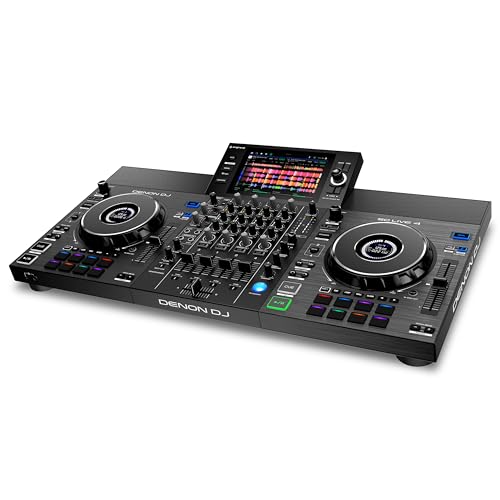
Denon DJ SC LIVE 4 Standalone Controller
Best for: mobile DJs needing laptop-free streaming
- System Type
- Standalone (what this guide is about)
- Compatible Software
- Serato DJ, Virtual DJ
- Deck Control
- 4-deck
- Standalone Operation
- Standalone, Engine DJ OS
- Connectivity
- Bluetooth
- Intended Use
- Streaming
View on Amazon: Denon DJ SC LIVE 4 Standalone Controller Affiliate link
The Denon DJ SC LIVE 4 is a standalone DJ controller that operates without a laptop. It features a 7-inch touchscreen and built-in speakers for portable practice or performance. You can stream music from services like Amazon Music Unlimited and TIDAL via Wi-Fi. The unit supports Engine DJ OS and integrates with Serato Pro. Its connectivity includes XLR and RCA outputs, making it suitable for mobile and club setups.
Pros
- Standalone operation with Engine DJ OS
- Built-in speakers for portable use
- 7-inch touchscreen for library browsing
- Wi-Fi streaming from major music services
- Compatible with Serato Pro and Virtual DJ
Cons
- No built-in rechargeable battery listed in specifications
- Heavier at 13.6 pounds compared to portable units
- Requires external power source for operation
Good fit if
- You need a laptop-free setup for live sets
- You want to stream music directly from cloud services
- You prefer a compact unit with built-in speakers
Skip if
- You require a built-in battery for outdoor events
- You need a lightweight controller for frequent travel
- You prefer a traditional mixer layout without a screen
Verdict: Denon DJ SC LIVE 4 Standalone Controller is a robust standalone system for DJs who want to eliminate laptops while retaining access to streaming libraries. It fits mobile performers who value integrated audio and wireless music access.
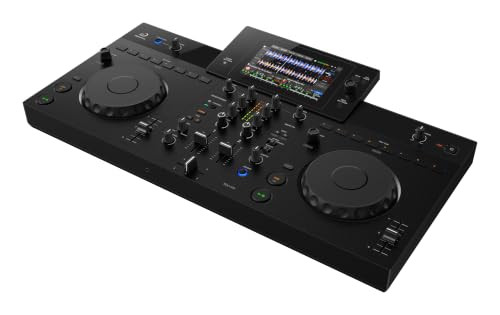
AlphaTheta 2-Channel Touchscreen DJ System
Best for: compact standalone setups with wireless monitoring
- System Type
- Standalone (what this guide is about)
- Channels
- 2-channel
- Compatible Software
- rekordbox, Serato, djay
- Standalone Operation
- Standalone
- Connectivity
- Bluetooth, XLR, RCA
- Features
- Touchscreen
View on Amazon: AlphaTheta 2-Channel Touchscreen DJ System Affiliate link
The AlphaTheta XDJ-AN is a 2-channel all-in-one DJ system designed for standalone use without a laptop. It features a touchscreen interface and built-in Wi-Fi for cloud streaming. The unit measures 25.1 by 14.2 inches and weighs 20 pounds. It supports Serato, djay, and rekordbox. This system suits DJs who want a compact standalone workflow with wireless monitoring capabilities.
Pros
- Standalone operation with no computer required
- Built-in Wi-Fi for cloud streaming
- Wireless monitoring with 9 ms latency
- Touchscreen interface for navigation
Cons
- 20-pound weight is heavy for portability
- No dedicated remote control listed
- Only 2 channels available
Good fit if
- You need a standalone system without a laptop
- You want wireless headphone monitoring
- You prefer touchscreen navigation
Skip if
- You require a 4-deck setup
- You need a lightweight portable unit
- You prefer physical jog wheels over touchscreens
Verdict: The AlphaTheta XDJ-AN 2-Channel All-in-One fits DJs who want a compact standalone system with wireless monitoring. It is best for those who value touchscreen control and cloud streaming over portability.
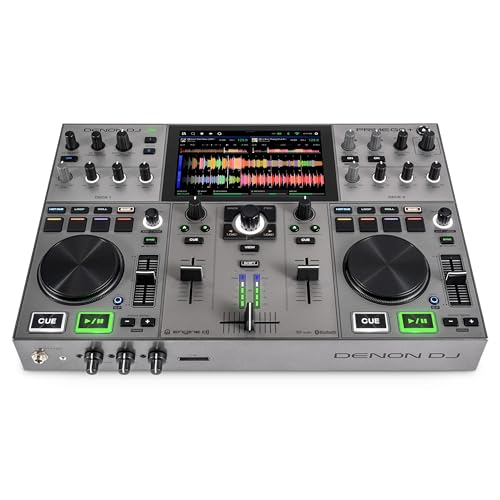
Denon DJ PRIME GO+ Standalone DJ Controller
Best for: Mobile DJs needing standalone streaming and pro outputs
- System Type
- Standalone (what this guide is about)
- Deck Control
- 2-deck
- Standalone Operation
- Battery-powered standalone, Engine DJ OS
- Connectivity
- Bluetooth
- Form Factor
- Portable
- Dimensions
- 16.2 × 10.8 × 2.1 inches
View on Amazon: Denon DJ PRIME GO+ Standalone DJ Controller Affiliate link
The Denon DJ PRIME GO+ is a standalone, portable DJ controller designed for mobile performers. It runs on Engine DJ OS and includes built-in Wi-Fi for streaming over 100 million tracks. The unit measures 16.2 by 10.8 inches and weighs 8.11 pounds. It features balanced XLR outputs, USB and SD inputs, and extensive FX options. This system allows for laptop-free performances with battery power.
Pros
- Built-in Wi-Fi and DRM chip for streaming music services
- Standalone operation using Engine DJ OS without a laptop
- Includes balanced XLR outputs, booth outs, and mic inputs
- Portable form factor with battery-powered capability
- Onboard song analysis and RGB waveform display
Cons
- Heavier than ultra-portable all-in-one systems at 8.11 pounds
- Stems performance requires prior preparation with Engine DJ Desktop
- No touchscreen interface for track selection or navigation
Good fit if
- You need a standalone system for mobile gigs
- You want direct Wi-Fi streaming without a laptop
- You require professional balanced audio outputs
Skip if
- You prefer a lightweight, ultra-portable all-in-one unit
- You want a touchscreen for intuitive track browsing
- You need immediate stem isolation without prior software prep
Verdict: The Denon DJ PRIME GO+ Standalone Portable Controller suits mobile DJs who need professional audio connections and standalone streaming without carrying a laptop. It fits those prioritizing robust connectivity over minimal weight.

Reloop Mixtour Pro 4-Deck DJ Controller
Best for: Portable four-deck software-based mixing
- System Type
- All-in-One (what this guide is about)
- Channels
- 4-channel
- Compatible Software
- Algoriddim djay Pro
- Deck Control
- 4-deck
- Audio Interface
- Integrated 4x Out USB sound card
- Form Factor
- Portable
View on Amazon: Reloop Mixtour Pro 4-Deck DJ Controller Affiliate link
The Reloop Mixtour Pro is an ultra-portable, all-in-one four-deck DJ controller. It measures 12.2 by 5.08 inches and weighs 2.11 pounds. The unit features a USB-C bus-powered design with optional 85W power delivery. It includes a 4x Out USB sound card with 24-bit Cirrus Logic converters. This system is designed for use with Algoriddim djay Pro software. It suits DJs needing a compact, high-quality portable setup.
Pros
- Ultra-portable form factor at 2.11 pounds
- Four-deck control capability
- 24-bit Cirrus Logic D/A converters
- USB-C bus-powered design
Cons
- Limited to two channels of physical control
- Requires Algoriddim djay Pro software
- No built-in standalone playback
Good fit if
- You need a lightweight, portable controller for travel
- You prefer using Algoriddim djay Pro software
- You want four-deck control in a small package
Skip if
- You require a standalone unit without a computer
- You prefer Pioneer or Denon ecosystem compatibility
- You need extensive physical mixing controls
Verdict: Reloop Mixtour Pro Portable All-in-One offers a compact, high-quality audio interface for DJs who prioritize portability and four-deck software control. It is ideal for travelers using djay Pro.
Specifications side by side
| Spec | ADJ Standalone DMX Lighting Controller | Pioneer DJ Standalone 2-Channel DJ System | Denon DJ SC LIVE 4 Standalone Controller | AlphaTheta 2-Channel Touchscreen DJ System | Denon DJ PRIME GO+ Standalone DJ Controller | Reloop Mixtour Pro 4-Deck DJ Controller |
|---|---|---|---|---|---|---|
| Channels | not stated | 2-channel | not stated | 2-channel | not stated | 4-channel |
| Compatible Software | not stated | rekordbox, Serato DJ Pro | Serato DJ, Virtual DJ | rekordbox, Serato, djay | not stated | Algoriddim djay Pro |
| Deck Control | not stated | not stated | 4-deck | not stated | 2-deck | 4-deck |
| Performance Pads | not stated | 16 Performance Pads | not stated | not stated | not stated | not stated |
| Standalone Operation | not stated | Standalone | Standalone, Engine DJ OS | Standalone | Battery-powered standalone, Engine DJ OS | not stated |
| Audio Interface | not stated | not stated | not stated | not stated | not stated | Integrated 4x Out USB sound card |
| System Type | Standalone | All-in-One | Standalone | Standalone | Standalone | All-in-One |
| Connectivity | not stated | not stated | Bluetooth | Bluetooth, XLR, RCA | Bluetooth | not stated |
| Form Factor | not stated | not stated | not stated | not stated | Portable | Portable |
| Features | DMX Control | not stated | not stated | Touchscreen | not stated | not stated |
| Intended Use | not stated | not stated | Streaming | Streaming | not stated | not stated |
| Dimensions | 10 × 9.25 × 3.5 inches | 18.5 × 28.7 × 4.66 inches | 15.9 × 28.4 × 3.9 inches | 25.1 × 14.2 × 3.5 inches | 16.2 × 10.8 × 2.1 inches | 5.08 × 12.2 × 2.01 inches |
| Weight | 2.36 pounds | 21 pounds | 13.6 pounds | 20 pounds | 8.11 pounds | 2.11 pounds |
| Color | Black | Black | Black | not stated | Grey | Black |
| Model | WMX1 MK2 | XDJ-RX3 | SCLIVE4 | XDJ-AN | PRIMEGO+ | 246959 |
| Size | not stated | not stated | SC Live 4 | not stated | PRIME GO+ | not stated |
Frequently asked questions
What is the difference between standalone and all-in-one DJ controllers?
A standalone controller runs its own software and processes audio internally without a computer. An all-in-one system combines mixing and playback functions into a single unit that may or may not require external software. The key distinction is whether the device operates independently or relies on a connected laptop for full functionality.
Do I need a laptop for a standalone DJ controller?
No, you do not need a laptop. Standalone units like the Denon DJ SC LIVE 4 or ADJ WMX1 Mk2 process audio and manage tracks on their own hardware. This eliminates the need for a USB connection to a computer, reducing cable clutter and avoiding software crashes caused by your laptop.
Can all-in-one controllers work without a computer?
Many all-in-one systems are designed for laptop-free workflows. For example, the Pioneer DJ XDJ-RX3 operates as a robust standalone unit with a professional layout. These devices handle audio processing internally, allowing you to perform without connecting to external software, though some models may still support computer integration for additional features.
Which system type is better for mobile DJs?
Standalone controllers are often preferred for mobile gigs due to their portability and reliability. The Denon DJ PRIME GO+ offers professional audio connections and streaming without a laptop. The Reloop Mixtour Pro is another compact option for travelers. These units reduce setup time and eliminate the risk of computer-related issues during performances.
How does system type affect portability?
Standalone and all-in-one systems vary significantly in weight and size. The ADJ WMX1 Mk2 weighs only 2.36 pounds, making it highly portable. In contrast, the Pioneer DJ XDJ-RX3 weighs 21 pounds. You should check the dimensions and weight in the specs to ensure the unit fits your transport needs and venue requirements.
Do standalone controllers support streaming services?
Yes, many modern standalone units include streaming capabilities. The Denon DJ SC LIVE 4 allows access to streaming libraries without a laptop. The AlphaTheta XDJ-AN also supports cloud streaming. These features let you access vast music catalogs directly on the device, keeping your workflow simple and efficient.
Is touchscreen control available on standalone systems?
Touchscreen interfaces are available on certain all-in-one standalone systems. The AlphaTheta XDJ-AN features a touchscreen for compact standalone setups with wireless monitoring. This allows for intuitive track selection and mixing without relying solely on physical buttons. Check the features list to confirm if a model includes this input method.
What are the main benefits of a standalone workflow?
Standalone workflows offer reliability and simplicity. You avoid software crashes caused by your computer and reduce cable clutter. Devices like the Pioneer DJ XDJ-RX3 provide a familiar, club-standard interface. This setup lets you focus on performance rather than managing software updates or connection issues, ensuring a smoother experience for live sets.