Pioneer DJ vs Roland DJ Controllers: Which Brand Fits You?
As an Amazon Associate we earn from qualifying purchases. Links on this page are affiliate links.
When you compare Pioneer DJ vs roland dj controller options, you look at two distinct approaches to digital mixing. Both units serve as USB audio interfaces for DJ software and include performance pads for live cues. The main difference lies in their deck configuration and software ecosystem. One model focuses on two-deck control with streaming integration, while the other offers four-deck mixing with built-in drum synthesis. You choose based on whether you prioritize simple two-deck workflows or expanded four-deck capabilities.
Key differences
| Aspect | Pioneer DJ 2-Channel Controller with 16 Pads | Roland DJ-202 Compact Four-Deck Controller |
|---|---|---|
| Deck Control | 2-deck | four-decks |
| Channels | 2-channel | Two-Channel |
| Performance Pads | 16 pads | eight dedicated pads |
| Compatible Software | not listed | Serato DJ Lite |
| Audio Interface | Built-in sound card | not listed |
| Weight | 6.17 pounds | 4.6 pounds |
Which one should you choose?
Choose Pioneer DJ 2-Channel Controller with 16 Pads if
- You want a simple 2-deck layout with 16 performance pads
- You need built-in sound card connectivity for speakers
- You plan to mix from streaming services like Apple Music or Tidal
Choose Roland DJ-202 Compact Four-Deck Controller if
- You need to mix four decks simultaneously
- You want to use Serato DJ Lite software
- You prefer a lighter, more compact unit at 4.6 pounds
Verdict: The Pioneer DJ DDJ-FLX4 suits those who want a straightforward 2-deck workflow with extensive pad control and streaming integration. The Roland DJ-202 is better for users who require four-deck mixing and specifically work with Serato DJ Lite. Your choice depends on whether you prioritize deck count or software compatibility.
Pioneer DJ vs Roland DJ Specs
Deck Control
The Roland DJ-202 offers four-deck control, allowing you to mix and layer up to four tracks simultaneously. This setup supports complex transitions and extended sets without needing additional hardware. In contrast, the Pioneer DJ DDJ-FLX4 provides 2-deck control. This configuration is standard for two-track mixing and is simpler for beginners learning to blend songs. If you need to manage more tracks at once, the Roland unit gives you that flexibility. The Pioneer model focuses on a streamlined two-deck workflow that is easier to learn initially.
Performance Pads
You get different pad counts depending on your choice. The Pioneer DJ DDJ-FLX4 includes 16 Performance Pads. This larger number supports more simultaneous actions like Hot Cues, Pad FX, and Sampler triggers. The Roland DJ-202 features eight dedicated pads. While fewer, these pads still handle Hot Cue, Loop, Sequencer, and Sampler modes effectively. The Pioneer unit offers more real estate for complex pad-based performances. The Roland pads are sufficient for basic cueing and sampling. Your choice depends on whether you prioritize pad quantity or specific pad functionality.
Compatible Software
Software compatibility is a key factor for your workflow. The Roland DJ-202 is designed for Serato DJ Lite, which is included. It also supports an upgrade to Serato DJ Pro. This integration allows you to drag tracks from Spotify and use the onboard sequencer. The Pioneer DJ DDJ-FLX4 supports various streaming services like Apple Music, Tidal, and Beatport. It does not specify a single bundled DJ software suite in the provided data. The Roland unit offers a clear, dedicated software path. The Pioneer unit focuses on broad streaming service access rather than a specific bundled DJ app.
Connectivity
Connection options vary between the two controllers. The Pioneer DJ DDJ-FLX4 connects via USB or Bluetooth. It also features a built-in sound card for speakers, allowing you to plug in directly. This makes it versatile for PC, Mac, iPhone, iPad, or Android devices. The Roland DJ-202 connects via USB and includes a MIDI output for external devices. It also has a mic input with effects. The Pioneer unit offers Bluetooth connectivity, which the Roland data does not mention. The Roland unit provides a dedicated MIDI output, which the Pioneer data does not list.
Form Factor
Size and portability differ significantly. The Roland DJ-202 is described as compact. It measures 18.8 inches in length, 11.7 inches in width, and weighs 4.6 pounds. The Pioneer DJ DDJ-FLX4 measures 10.7 inches in length, 19 inches in width, and weighs 6.17 pounds. The Roland unit is lighter and has a different footprint. The Pioneer unit is wider but shorter in length. The Roland model is explicitly labeled compact. The Pioneer model is a standard 2-channel layout. Your desk space and transport needs will dictate which size works better for you.
Which DJ Controller Fits Your Style
Beginners wanting simple genre blending
The DDJ-FLX4 features a Smart Fader that auto-adjusts volume, bass, and BPM. You can blend genres by moving one fader without manual beatmatching skills. Its layout is user-friendly and inherited from pro gear. This makes it an easy starting point for learning digital mixing on PC, Mac, or mobile devices via USB or Bluetooth.
Live performers needing four-deck control
The Roland DJ-202 offers four-deck control, allowing you to mix and layer up to four tracks simultaneously. This setup supports complex transitions and extended sets without needing additional hardware. You get independent sampler volume control and eight dedicated pads for Hot Cue, Loop, Sequencer, and Sampler modes to enhance your live performance capabilities.
Beatmakers using built-in drum kits
This controller includes genre-defining built-in drum kits from Roland's legendary TR-808, TR-909, and TR-606. It uses advanced ACB technology for authentic sound. An onboard 16-step sequencer controls Serato DJ Lite’s sampler for on-the-fly beat creation. You can also engage Inst-Rec mode for real-time sequencing or sync external MIDI devices for deeper musical integration.
Streamers mixing from music apps
The DDJ-FLX4 is built for streaming and live-streaming from a single device. You can mix directly from Apple Music, Tidal, and Beatport. It supports streaming out to your audience while you perform. The unit connects to various devices by USB or Bluetooth, featuring a built-in sound card for speakers, making it ideal for online broadcasts.
The products compared
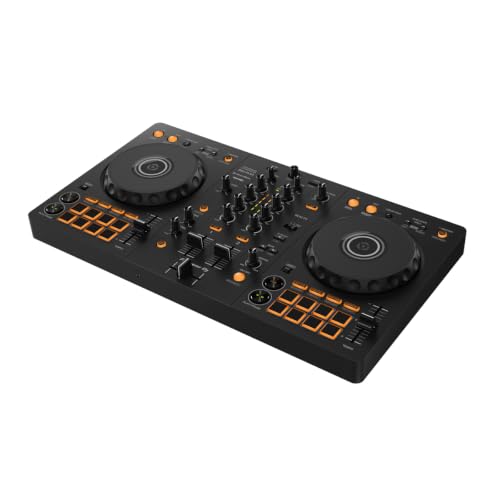
Pioneer DJ 2-Channel Controller with 16 Pads
Best for: Beginners using streaming services
- Channels
- 2-channel
- Deck Control
- 2-deck
- Performance Pads
- 16 Performance Pads
- Audio Interface
- Built-in sound card
- Intended Use
- Streaming
- Included Accessories
- Microphone
View on Amazon: Pioneer DJ 2-Channel Controller with 16 Pads Affiliate link
The Pioneer DJ DDJ-FLX4 is a 2-channel, 2-deck controller designed for beginners and intermediate DJs. It features 16 performance pads and a built-in sound card. The Smart Fader assists with beatmatching by adjusting volume, bass, and BPM. You can connect via USB or Bluetooth to PC, Mac, or mobile devices. It supports streaming from Apple Music, Tidal, and Beatport. This unit measures 19 inches wide and weighs 6.17 pounds.
Pros
- 2-channel, 2-deck control layout
- 16 Performance Pads for Hot Cues and FX
- Smart Fader auto-adjusts volume, bass, and BPM
- Built-in sound card for direct speaker connection
- Bluetooth and USB connectivity for multiple devices
Cons
- Fixed 2-channel configuration limits simultaneous track mixing
- No dedicated display screen for track information
- Heavier build at 6.17 pounds for portability
Good fit if
- You want a simple layout to learn DJing basics
- You need to mix from streaming services like Apple Music
- You prefer a single device for live-streaming or MCing
Skip if
- You require more than 2 channels for complex mixing
- You need a lightweight controller for frequent travel
- You prefer hardware-only control without software dependency
Verdict: The Pioneer DJ DDJ-FLX4 Compact Controller fits beginners who want a straightforward path into DJing with streaming support. Its Smart Fader reduces the learning curve for beatmatching while the 16 pads offer creative control.

Roland DJ-202 Compact Four-Deck Controller
Best for: mobile DJs needing scratch platters and drum kits
- Channels
- Two-channel
- Compatible Software
- Serato DJ Lite, Serato DJ Pro
- Deck Control
- Four-deck
- Jog Wheels
- Large, low-latency platters
- Connectivity
- USB
- Form Factor
- Compact
View on Amazon: Roland DJ-202 Compact Four-Deck Controller Affiliate link
The Roland DJ-202 is a compact two-channel controller supporting four decks with Serato DJ Lite. It features large, low-latency platters designed for scratching and eight dedicated performance pads. Built-in drum kits from the TR-808, TR-909, and TR-606 use ACB technology for authentic sound. The onboard 16-step sequencer allows for real-time beat creation. This unit weighs 4.6 pounds and measures 18.8 inches in length, offering a portable form factor for mobile DJs.
Pros
- Large, low-latency platters optimized for scratching
- Built-in TR-808, TR-909, and TR-606 drum kits with ACB technology
- Onboard 16-step sequencer for beat creation
- Supports four-deck control via Serato DJ Lite
Cons
- Smaller footprint compared to full-size controllers
- Limited to two physical channels
- No dedicated display for track information
Good fit if
- You need a portable controller for mobile gigs
- You prioritize scratching performance with large platters
- You want authentic Roland drum sounds built-in
Skip if
- You require a built-in screen for track details
- You need four physical channel controls
- You prefer a larger, stationary setup
Verdict: Roland DJ-202 Compact 2-Channel Controller is a compact, scratch-focused tool for mobile DJs who value authentic drum sounds and portability over extensive physical controls.
Specifications side by side
| Spec | Pioneer DJ 2-Channel Controller with 16 Pads | Roland DJ-202 Compact Four-Deck Controller |
|---|---|---|
| Channels | 2-channel | Two-channel |
| Compatible Software | not stated | Serato DJ Lite, Serato DJ Pro |
| Deck Control | 2-deck | Four-deck |
| Performance Pads | 16 Performance Pads | not stated |
| Jog Wheels | not stated | Large, low-latency platters |
| Audio Interface | Built-in sound card | not stated |
| Connectivity | not stated | USB |
| Form Factor | not stated | Compact |
| Features | Performance Pads | not stated |
| Intended Use | Streaming | not stated |
| Included Accessories | Microphone | not stated |
| Dimensions | 10.7 × 19 × 2.33 inches | 18.8 × 11.7 × 2.4 inches |
| Weight | 6.17 pounds | 4.6 pounds |
| Color | Graphite | BLACK |
| Model | DDJ-FLX4 | DJ-202 |
| Size | not stated | Two-Channel, Four-Deck with Serato DJ Pro |
Frequently asked questions
Which controller is more portable for mobile gigs?
The Roland DJ-202 is the more portable option. It weighs only 4.6 pounds and measures 18.8 inches in length. Its compact form factor makes it easier to transport than the Pioneer DJ DDJ-FLX4, which weighs 6.17 pounds and is slightly longer at 19 inches. This lighter weight benefits mobile DJs who carry gear frequently.
Can I mix four tracks at once with these units?
Only the Roland DJ-202 supports four-deck control. This allows you to mix and layer up to four tracks simultaneously. The Pioneer DJ DDJ-FLX4 is limited to two channels. It handles two decks, so you cannot layer four tracks on this unit without additional hardware.
Which model is better for beginners learning to mix?
The Pioneer DJ DDJ-FLX4 is designed for beginners. It includes a Smart Fader that automatically adjusts volume, bass, and BPM. This feature reduces the learning curve for beatmatching. The Roland DJ-202 focuses on scratch platters and drum kits, which may be less intuitive for those new to DJing.
Do both controllers include performance pads?
Yes, both units feature performance pads. The Pioneer DJ DDJ-FLX4 includes 16 pads for creative control and live cues. The Roland DJ-202 also provides pads for triggering samples and cues. These pads allow you to add rhythmic elements and effects during your sets on either device.
What is the physical size difference between the two?
The Roland DJ-202 is slightly shorter but narrower. It measures 18.8 inches in length and 11.7 inches in width. The Pioneer DJ DDJ-FLX4 is 19 inches long and 10.7 inches wide. Both units have a similar height, around 2.3 to 2.4 inches, making them comparable in footprint.
Which controller supports streaming services for beginners?
The Pioneer DJ DDJ-FLX4 supports streaming services. It is specifically noted as fitting beginners who want a straightforward path into DJing with this capability. The provided data does not mention streaming support for the Roland DJ-202, so you should verify its compatibility separately if that feature is essential.
Is one controller better for scratch mixing?
The Roland DJ-202 is better for scratch mixing. It features scratch platters that provide authentic tactile feedback for scratching. This makes it a compact, scratch-focused tool for mobile DJs. The Pioneer DJ DDJ-FLX4 does not mention scratch platters in its specifications, focusing instead on beatmatching assistance.