Behringer 5-Channel Digital DJ Mixer Review: Specs, Pros and Cons
As an Amazon Associate we earn from qualifying purchases. Links on this page are affiliate links.
This behringer digital pro mixer ddm4000 review looks at a 5-channel digital unit built for live performance. It features a 32-bit digital architecture and four multi-FX sections. You get four stereo channels with programmable parametric 3-band EQ and two microphone inputs. The mixer includes a beat-synchronized sampler and digital crossfader. It supports up to eight signal sources simultaneously. This setup is designed for DJs who need extensive channel control and real-time effects processing during their sets. The hardware focuses on digital precision and flexible routing options for complex audio environments.
What stands out
- Five-channel digital mixer with 32-bit processing
- Four multi-FX sections for real-time effects
- Programmable parametric 3-band EQ per channel
- Beat-synchronized sampler with loop function
- Supports up to eight simultaneous signal sources
Who it fits
Good fit for
This mixer suits DJs who need extensive channel count and digital flexibility. If you run multiple turntables and CDJs simultaneously, the five-channel layout helps. The parametric EQ allows precise sound shaping for each source. The built-in sampler and multi-FX sections let you add creative layers without external gear. It is ideal for club setups or home studios where digital integration and detailed signal control are priorities.
Who should skip it
Look elsewhere if you prefer analog warmth or simple setups. This unit is strictly digital, which may not match your tonal preferences. The complex feature set, including the sampler and multi-FX sections, might be overkill for beginners. If you only need two channels for basic mixing, this hardware is unnecessarily large and feature-heavy. You might find a simpler, smaller mixer more suitable for your needs.
Verdict: The Behringer DDM4000 is a robust 5-channel digital mixer for DJs needing extensive control and built-in effects. It fits complex setups well but may overwhelm users seeking simplicity.
Key specs explained for this mixer
Mixer Type: 32-bit digital DJ mixer
This specification indicates the internal signal processing uses 32-bit resolution. You get greater precision in volume and effect adjustments compared to lower bit depths. The digital architecture reduces noise and distortion during mixing. This matters if you prioritize clean audio quality. It distinguishes this unit from older analog or lower-end digital controllers.
Channel Count: 5-channel
The mixer supports five distinct input channels. You can connect multiple sources simultaneously, such as two turntables, two CDJs, and a microphone. This setup allows for complex live transitions without swapping cables. It suits DJs who need to manage more inputs than standard 2-channel or 4-channel units offer.
Channel Equalizer: Programmable parametric 3-band EQ
You get three frequency bands per channel with programmable controls. This lets you cut or boost specific frequencies precisely. The parametric nature allows for detailed sound shaping beyond standard fixed EQs. You can tailor the mix to the room acoustics. This feature benefits DJs who want fine-grained control over their audio output.
Built-In Effects: 4 multi-FX sections
The unit includes four separate sections for digital effects. You can apply different effects to different channels at the same time. This allows for layered sound design and complex transitions. You do not need external effect units. This is useful for live performances where you need to manipulate audio in real-time across multiple sources.
Design and build specs
According to the listing, the Behringer DDM4000 measures 15.4 inches in length, 12.6 inches in width, and 4.33 inches in height. It weighs 12.4 pounds. These dimensions indicate a substantial unit designed for permanent or semi-permanent installations rather than portable gigs. The size allows for a wide layout, accommodating five channels and extensive control sections without requiring a compact footprint. You need a dedicated space large enough to house this mixer comfortably.
The build features a digital architecture with a 32-bit internal processing system. This specification suggests a focus on signal clarity and reduced noise during operation. The unit includes four stereo channels and two microphone inputs, providing flexible connectivity for various sources. The presence of a digital crossfader and MIDI connectivity supports integration with other digital gear. You can connect up to eight signal sources simultaneously, which suits complex setups requiring multiple inputs.
The physical controls include programmable parametric 3-band EQ for each channel. This allows precise frequency adjustments to tailor the sound. The mixer also features four multi-FX sections and a beat-synchronized sampler. These elements are integrated into the chassis, meaning you do not need external effects units for basic processing. The design prioritizes functionality and connectivity over compactness. You should ensure your DJ booth or studio has sufficient depth and width to accommodate the unit's length and weight securely.
Setup and everyday use guide
Setting up the Behringer DDM4000 involves connecting up to eight signal sources simultaneously. The unit provides four Phono/Line stereo channels for your main decks or players. You also have two dedicated microphone inputs. Each mic channel includes gain control, equalization, and a talk function. This allows you to manage vocals or announcements without interrupting the music flow. The mixer’s digital architecture means you do not need external processing units for basic operations. You connect your audio sources directly to the stereo inputs. The 32-bit digital signal path handles the mixing internally. This reduces the need for additional outboard gear. In daily use, you control the sound through four multi-FX sections. You can apply effects to individual channels or the master output. The programmable parametric 3-band EQ lets you shape the tone of each source precisely. You can also use the kill function to remove specific frequency bands. The beat-synchronized sampler adds another layer of control. You can trigger loops and samples that stay in time with your mix. The real-time pitch control allows for smooth transitions. The digital crossfader ensures consistent response across the entire range. You can assign the crossfader to different functions as needed. The MIDI connectivity allows you to integrate the mixer with computer software or other digital gear. This makes it suitable for hybrid setups. The unit’s substantial weight and size suggest it is designed for a fixed location. You likely will not move it between venues frequently. Instead, you will use it as a central hub for your DJ station. The flexible channel assignments let you customize the workflow to your style. You can prioritize certain inputs or effects based on your performance needs.
Before you buy this mixer
This unit is a substantial piece of equipment. At 12.4 pounds, it is not designed for portability. You will likely need a sturdy rack or shelf to support its weight. The listing notes four Phono/Line stereo channels. You must verify your turntables or CDJs connect via standard RCA cables. If you use digital players, ensure they have line outputs. The mixer includes two microphone inputs. You should check if your microphones require phantom power or specific connectors. The 32-bit digital architecture suggests low latency. However, you need to confirm your computer or controller can interface with the MIDI ports if you plan to sync software. Upkeep involves keeping dust off the digital crossfader and EQ knobs. This mixer fits alongside other options in DJ Controllers & DJ Gear as a standalone hardware solution. It does not replace a controller but complements traditional vinyl or digital setups. You should consider if you need this level of channel count for your specific gigs.
Check before you buy
- Verify your turntables have RCA line outputs for the four stereo channels.
- Check if your microphones require phantom power for the two mic inputs.
- Ensure you have rack space for the 15.4-inch length and 12.4-pound weight.
- Confirm your software supports the MIDI connectivity for beat-synchronized functions.
The product at a glance
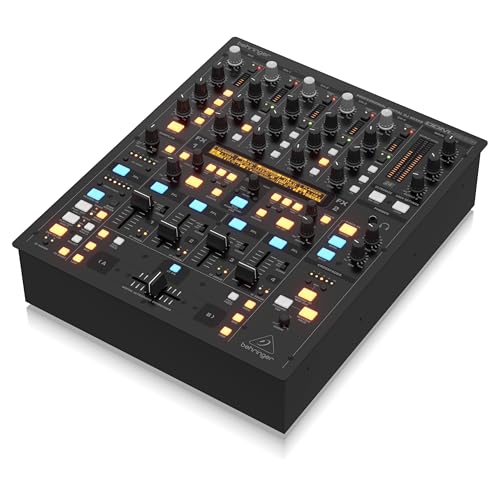
Behringer 5-Channel Digital DJ Mixer
Best for: Multi-source digital mixing and sampling
- Channel Count
- 5-Channel
- Mixer Type
- Digital DJ Mixer
- Built-In Effects
- 4 multi-FX sections
- Channel Equalizer
- Programmable parametric 3-band EQ
- Form Factor
- Rack-Mount
- Dimensions
- 15.4 × 12.6 × 4.33 inches
View on Amazon: Behringer 5-Channel Digital DJ Mixer Affiliate link
The Behringer DDM4000 is a 5-channel digital DJ mixer featuring a beat-synchronized sampler and four multi-FX sections. It includes two BPM counters and a digital crossfader. The unit offers four stereo channels with parametric 3-band EQ and two microphone inputs. Weighing 12.4 pounds, it connects up to eight signal sources. This mixer suits DJs who need extensive routing and digital effects control.
Pros
- Five-channel configuration for up to eight simultaneous signal sources
- Built-in beat-synchronized sampler with real-time pitch control
- Four multi-FX sections for sound manipulation
- Two dedicated microphone inputs with gain and talk function
- Programmable parametric 3-band EQ with kill function per channel
Cons
- Heavy build at 12.4 pounds for portability
- No display screen for visual feedback mentioned in data
- No Bluetooth connectivity listed in specifications
Good fit if
- You need to mix five separate audio sources simultaneously
- You require a dedicated sampler for beat-controlled loops
- You want parametric EQ control for precise sound shaping
Skip if
- You prioritize lightweight gear for mobile gigs
- You need wireless Bluetooth connectivity for streaming
- You prefer analog mixing over digital signal processing
Verdict: Behringer DDM4000 5-Channel Digital Mixer provides robust digital routing and sampling for studio or fixed installations. It fits DJs who need extensive channel count and sampler integration rather than portable setups.
Specifications side by side
| Spec | Behringer 5-Channel Digital DJ Mixer |
|---|---|
| Channel Count | 5-Channel |
| Mixer Type | Digital DJ Mixer |
| Built-In Effects | 4 multi-FX sections |
| Channel Equalizer | Programmable parametric 3-band EQ |
| Form Factor | Rack-Mount |
| Dimensions | 15.4 × 12.6 × 4.33 inches |
| Weight | 12.4 pounds |
| Size | 6.05 |
| Color | Not Available |
| Model | DDM4000 |
Frequently asked questions
Is the Behringer DDM4000 suitable for portable DJ sets?
No, this mixer is not designed for portability. It weighs 12.4 pounds and measures 15.4 inches in length. These dimensions indicate it is built for fixed installations or studio environments. You should plan for a permanent setup rather than transporting it to gigs.
How many channels does the Behringer DDM4000 have?
The Behringer DDM4000 features five channels total. This includes four stereo channels and two microphone inputs. You can connect up to eight signal sources simultaneously. This layout supports extensive multi-source digital mixing and sampling for complex performances.
Does the Behringer DDM4000 include built-in effects?
Yes, the unit includes four multi-FX sections. You can apply digital effects to your audio signals during mixing. The 32-bit digital architecture ensures precise control over these effects. This allows for detailed sound manipulation without external hardware.
What type of equalization is available on this mixer?
Each of the four stereo channels has programmable parametric 3-band EQ. You can adjust high, mid, and low frequencies with precision. This control helps you shape the tonal balance of each source. The digital processing maintains clarity during adjustments.
Can I connect microphones to the Behringer DDM4000?
Yes, the mixer provides two dedicated microphone inputs. Each mic channel includes gain control and equalization. You can integrate vocalists or announcers directly into your mix. The digital routing handles these inputs alongside your main audio sources.
What is the primary use case for this digital mixer?
This mixer is best for multi-source digital mixing and sampling. It fits DJs who need extensive channel count and sampler integration. It is ideal for studio or fixed installations rather than portable setups. You get robust digital routing for complex audio environments.