Aniwini DMX 512 MA2 Command Review: Specs, Pros and Cons
As an Amazon Associate we earn from qualifying purchases. Links on this page are affiliate links.
This aniwini dmx 512 console review focuses on a compact lighting controller designed for professionals who need reliable, real-time control. The device supports 2048 real-time control parameters and can store up to 65,536 system parameters for complex setups. It weighs 33.1 pounds, making it portable enough for touring while remaining sturdy for fixed installations. The layout mirrors the GrandMA2 command structure, which helps users familiar with that system adapt quickly. This console connects to a PC for easier programming and offers versatile control through its array of faders and buttons. It is built for clubs, live venues, and large-scale events where precise lighting adjustments are essential.
What stands out
- Supports 2048 real-time control parameters and backups up to 65,536 system parameters
- Includes 6 execution faders, 18 fader buttons, and 4 encoders for flexible programming
- Features 2 DMX outputs and 1 DMX input (5-pin XLR) for professional connectivity
- PC-compatible design with a command layout similar to GrandMA2 for easy operation
- Weighs 33.1 pounds, offering a balance between portability and durability
Who it fits
Good fit for
This console suits lighting designers and DJs who manage complex setups in clubs, weddings, or live shows. The extensive parameter support and versatile interface allow for detailed programming without needing a full-size console. Users who travel frequently will appreciate the PC compatibility and compact form factor. It is ideal for those who need independent backlighting and dimmable mute controls for quick adjustments during performances. If you require a reliable, portable solution for editing and controlling DMX lights, this device fits your workflow.
Who should skip it
If you are looking for a standalone unit without PC connection, this may not be the right choice. The console requires a PC for easy operation, which adds a layer of setup complexity. Users who prefer simple, button-only controls without faders or encoders might find the interface too detailed. Additionally, if you do not need the high parameter capacity or professional DMX connectivity, this device offers more than necessary. Consider a simpler controller if your lighting needs are basic and do not involve complex programming or large-scale installations.
Verdict: This console is a practical choice for professionals who need GrandMA2-like control in a portable package. Its extensive parameter support and versatile interface make it suitable for complex lighting setups in various venues.
Key specs explained for Aniwini DMX
2048 real-time control parameters
This count defines how many individual light channels you can adjust instantly during a performance. You can tweak intensity, color, and movement for up to 2048 fixtures without lag. This level of granularity suits large venues with complex rigs. Smaller controllers often limit this number, forcing you to use macros. If you manage many moving heads, this high count ensures smooth, precise changes in real time.
65,536 system parameters backup
This figure indicates the maximum storage capacity for your entire lighting show data. You can save detailed cues, palettes, and macros for later retrieval. This capacity supports extensive, multi-part productions without running out of memory. It is essential for touring professionals who swap shows frequently. When comparing gear, check if the backup limit matches your show size to avoid data loss during transport or setup.
6 execution faders
These six physical sliders allow you to trigger and control specific scenes or cues directly. You can assign them to favorite macros or live effects for quick access. This layout mirrors professional consoles, helping you transition from PC to hardware. It reduces reliance on mouse clicks during dynamic events. For DJs or light operators, having dedicated faders improves workflow speed and accuracy compared to touch-only interfaces.
2 DMX outputs and 1 DMX input
These ports handle the standard digital signal used to communicate with lighting fixtures. Two outputs let you chain multiple devices or split signals to different zones. The single input allows you to sync with other controllers or pre-recorded shows. This configuration supports standard 5-pin XLR connections found in most clubs. It ensures compatibility with industry-standard equipment, unlike proprietary wireless systems that may lack universal support.
33.1 pounds weight
This mass reflects the build quality and internal components of the unit. While heavier than a laptop, it provides stability on a table or stand during intense use. The weight helps prevent accidental tipping or sliding when you adjust faders rapidly. It suggests durable construction suitable for touring. Compare this to lightweight plastic controllers, which may feel less robust but offer easier carrying.
Design and Build Overview
The Aniwini DMX 512 MA2 Command Wing Console presents a compact form factor designed for mobility. According to the listing, the unit weighs 33.1 pounds. This weight suggests a sturdy chassis suitable for touring, yet light enough for a single person to transport. The design prioritizes durability without sacrificing portability, making it viable for mobile DJs and venue technicians who move gear frequently.
The control interface mirrors the layout of the GrandMA2 system. This familiarity reduces the learning curve for professionals already trained on that platform. The console features six execution faders and eighteen fader buttons. You also get two A/B switching faders and six execution buttons. Six page buttons and four encoders complete the physical controls. This dense arrangement allows for flexible programming and quick access to critical functions during live shows.
Connectivity includes two DMX outputs and one DMX input via a 5-pin XLR connector. The unit also offers a remote analog signal input. These ports ensure compatibility with standard professional lighting rigs. Independent backlighting and a dimmable mute button add to the usability in low-light environments. The overall build supports complex lighting setups in clubs and live venues. You get a tool that bridges PC-based editing with real-time physical control.
Setup and everyday use
Setting up this controller involves connecting it to a PC for operation. The listing notes a command layout similar to GrandMA2. This similarity may help users familiar with that system navigate the interface more quickly. You connect via standard PC connectivity. The device includes two DMX outputs and one DMX input using 5-pin XLR connectors. You can link these to your lighting fixtures and other DMX devices. The unit also features a remote analog signal input. This allows for external control signals during operation. A dimmable mute button is present. You can adjust its backlight for visibility in different venue lighting conditions. Daily use centers on the physical controls. You have six execution faders for real-time adjustments. Eighteen fader buttons and two A/B switching faders provide additional control layers. Six execution buttons and six page buttons help you navigate different scenes or presets. Four encoders offer precise parameter tweaking. The system supports 2048 real-time control parameters. You can manipulate these instantly during a show. It also backs up to 65,536 system parameters. This storage capacity allows you to save complex setups for reuse. The compact design, weighing 33.1 pounds, facilitates mobility. You can transport it between venues with relative ease. The build is described as durable. This suits the demands of clubs and live shows. The controller is intended for editing and professional mixing. You use it to manage lighting for DJs, bars, weddings, and LED installations. The interface is designed for flexible programming. You can assign functions to the various buttons and faders to suit your specific workflow needs.
Before you buy this controller
You need a PC to operate this unit. The listing states the command layout mirrors GrandMA2. If you know that system, you will adapt faster. You must verify your computer runs the required software. This controller connects to your PC for programming and control. It does not work as a standalone device without a host computer. You should also check your venue’s DMX infrastructure. The unit has two DMX outputs and one input. Ensure your lighting fixtures use standard DMX512 protocols. Cables and adapters are not included. You will need to purchase those separately. Keep the unit dry and clean. Dust can affect the faders and buttons over time. This console sits alongside other DJ gear. It handles lighting, not audio. You use it for visual effects during performances. It fits well in clubs, weddings, and live shows. Just remember it is a lighting tool, not a mixer. Plan your setup carefully around its PC dependency.
Check before you buy
- Confirm your PC runs the necessary control software.
- Check if you know the GrandMA2 command layout.
- Ensure your venue has standard DMX512 connections.
- Buy DMX cables and XLR adapters separately.
The product at a glance
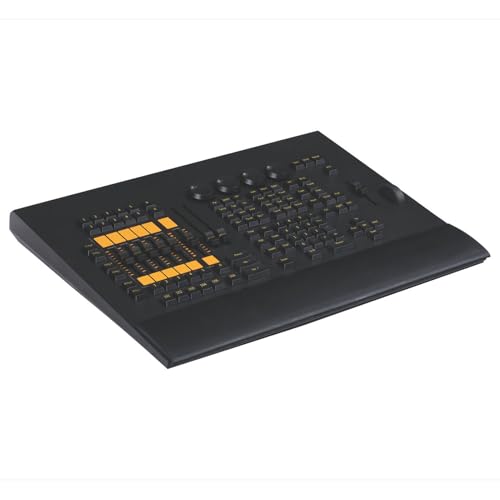
Aniwini DMX 512 MA2 Command Wing Console
Best for: complex lighting setups requiring precise control
- Features
- DMX Control
- Weight
- 33.1 pounds
View on Amazon: Aniwini DMX 512 MA2 Command Wing Console Affiliate link
The Aniwini DMX 512 Console offers 2048 real-time control parameters and supports backups of up to 65,536 system parameters. It features 6 execution faders, 18 fader buttons, and 2 DMX outputs via 5-pin XLR. Weighing 33.1 pounds, it connects to a PC for programming. This controller suits DJs and live venues needing flexible lighting mixing.
Pros
- Supports 2048 real-time control parameters
- Includes 6 execution faders and 18 fader buttons
- Features 2 DMX outputs and 1 DMX input
- Backs up to 65,536 system parameters
Cons
- Requires a PC for operation
- Weighs 33.1 pounds
- Uses 5-pin XLR connectivity only
Good fit if
- You need precise control over complex lighting setups
- You require backup capabilities for large parameter sets
- You work in clubs or live venues with DMX systems
Skip if
- You prefer wireless control without a PC
- You need a lightweight portable device under 10 pounds
- You require USB or Ethernet connectivity
Verdict: Aniwini DMX 512 Console fits professionals managing intricate lighting rigs who need extensive parameter control and reliable DMX outputs via XLR.
Specifications side by side
| Spec | Aniwini DMX 512 MA2 Command Wing Console |
|---|---|
| Features | DMX Control |
| Weight | 33.1 pounds |
Frequently asked questions
Is this controller suitable for complex lighting setups?
Yes, the Aniwini DMX 512 MA2 Command Wing Console is designed for complex lighting setups requiring precise control. It supports 2048 real-time control parameters and stores up to 65,536 system parameters. This capacity allows professionals to manage intricate rigs with extensive parameter control and reliable DMX outputs via XLR connections.
Does it require a computer to operate?
Yes, you need a PC to operate this unit. The controller connects to your computer via standard PC connectivity. The listing states the command layout mirrors GrandMA2. You must verify your computer runs the required software before connecting the device to ensure proper functionality during your lighting design sessions.
How heavy is the Aniwini DMX 512 console?
The unit weighs 33.1 pounds according to the product listing. This weight suggests a sturdy chassis suitable for touring, yet it remains light enough for a single person to move. The compact form factor is designed for mobility, allowing you to transport it easily between venues without excessive strain.
Can I use it if I know GrandMA2?
Yes, familiarity with GrandMA2 will likely help you adapt faster. The listing notes a command layout similar to GrandMA2. This similarity may help users familiar with that system navigate the interface more quickly. You can leverage your existing knowledge to control the 2048 real-time parameters efficiently during performances.
What connectivity does this lighting controller use?
The device uses standard PC connectivity to link with your computer. It also provides reliable DMX outputs via XLR connectors for your lighting fixtures. You connect the controller to your PC for operation, which then manages the data flow to the connected lights through the XLR daisy chain.
Is this console good for professionals?
Yes, it fits professionals managing intricate lighting rigs who need extensive parameter control. The device supports 2048 real-time control parameters and stores up to 65,536 system parameters. This level of granularity suits large setups where you need to tweak intensity, color, and movement for up to 2048 fixtures without lag.
Does it have a built-in display?
The provided product data does not mention a built-in display. The controller relies on your PC for operation and interface. You must verify your computer runs the required software to view and control the 2048 real-time parameters. The device focuses on connectivity and parameter handling rather than standalone visual feedback.