8-Channel vs 16-Channel DJ Mixers: Which Should You Buy?
As an Amazon Associate we earn from qualifying purchases. Links on this page are affiliate links.
Choosing between an 8-Channel vs 16-Channel dj mixer depends on your input needs. Both units offer USB audio interface capabilities and built-in digital effects for live performance. The main difference lies in channel count and physical footprint. The Pyle model provides eight channels in a compact steel chassis. The Mackie unit delivers sixteen channels with dedicated preamps. You must decide if your setup requires more inputs or a smaller footprint.
Key differences
| Aspect | Pyle 8-Channel USB Audio Mixer with Bluetooth | Mackie ProFX16v3 16-Channel USB Mixer |
|---|---|---|
| Channel Count | 8 Channel | 16 |
| Equalizer | 3-band EQ | not listed |
| Preamps | not listed | Onyx Preamps, 60 dB gain |
| Built-In Effects | DSP FX | 24 built-in effects |
| Dimensions | 10.8 x 9.26 x 2.56 inches | 17.1 x 4.4 x 17.7 inches |
| Weight | 3.97 pounds | 19.7 pounds |
Which one should you choose?
Choose Pyle 8-Channel USB Audio Mixer with Bluetooth if
- You need a compact unit that fits easily on a small desk or stage.
- You only require inputs for up to eight sources.
- You prefer a lighter device for frequent transport.
Choose Mackie ProFX16v3 16-Channel USB Mixer if
- You need to connect sixteen simultaneous inputs.
- You require dedicated mic preamps with 60 dB of clean gain.
- You want to mix room audio and record multitrack simultaneously.
Verdict: The Pyle mixer suits performers with limited inputs or space constraints. The Mackie mixer is better for larger bands or studios needing more channels and dedicated preamps. Your choice depends on whether you prioritize channel count or physical size.
8 vs 16 Channel Mixer Specs
Channel Count
The Pyle PMXU83BT offers eight input channels, which is sufficient for most solo DJs or small live setups. You get stereo line inputs and microphone inputs on these channels. The Mackie ProFX16v3 doubles that capacity with sixteen channels. This allows you to connect more instruments or microphones simultaneously without needing an external mixer. If you are running a full band, the Mackie provides the necessary headroom. For simpler setups, the Pyle's eight channels are likely all you need.
Physical Dimensions
Size is a major factor for transport and desk space. The Pyle mixer measures 10.8 inches wide and weighs just 3.97 pounds. It is compact and lightweight, making it easy to carry to gigs. The Mackie ProFX16v3 is significantly larger at 17.1 inches wide and weighs 19.7 pounds. This substantial increase in size reflects the additional channels and internal components. You will need a larger table or flight case for the Mackie. The Pyle is clearly more portable for mobile DJs.
Built-In Effects
Both mixers include digital signal processing for effects, but the implementation differs. The Pyle model features DSP FX, providing basic processing for your audio signals. The Mackie ProFX16v3 includes the GigFX Engine with twenty-four built-in effects. This gives you a wider variety of options for reverb, delay, and other processing types. If you rely heavily on onboard effects for live performance, the Mackie offers more variety. The Pyle provides essential effects without overwhelming the user with choices.
Preamp Quality
Microphone preamps are critical for clean audio capture. The Mackie ProFX16v3 highlights its Onyx Preamps, offering sixty decibels of clean gain on every microphone channel. This specification suggests high-quality signal amplification with low noise. The Pyle PMXU83BT lists +48V phantom power and XLR inputs but does not specify preamp gain levels or brand quality in the provided data. Without specific gain figures for the Pyle, the Mackie has a documented advantage in preamp specifications for vocal or instrument clarity.
Power Supply
Power requirements affect where you can use the mixer. The Pyle PMXU83BT includes a multi-voltage power supply supporting 100V to 240V. This makes it suitable for worldwide travel without needing converters. The Mackie ProFX16v3 data does not specify its voltage range in the provided text. You should check the label for your region. If you travel internationally frequently, the Pyle's explicit worldwide voltage support is a clear practical benefit. For local use, this may be less critical.
Which DJ Mixer Fits Your Needs
Portable DJ needing compact gear
The Pyle PMXU83BT weighs 3.97 pounds and measures 10.8 inches wide. Its rugged steel chassis resists dust. You get Bluetooth streaming and USB audio interface capabilities. This compact size suits mobile performers who prioritize transportability without sacrificing essential mixing functions.
Studio recording with multiple inputs
The Mackie ProFX16v3 offers sixteen channels for complex setups. You get Onyx Preamps with 60 dB of clean gain. It records multitrack audio via USB while mixing simultaneously. The GigFX engine provides 24 built-in effects. This unit handles larger bands and detailed recording tasks.
Small venue live performance
For smaller stages, the Pyle mixer provides eight channels with +48V phantom power. You can connect microphones and stereo line inputs easily. The ultra-low noise design ensures clear audio. Its multi-voltage power supply supports worldwide usage for traveling performers.
Quick picks
| # | Product | Best for | Price |
|---|---|---|---|
| 1 | Pyle 8-Channel USB Audio Mixer with Bluetooth | Small gigs needing Bluetooth and phantom power | Check price of Pyle 8-Channel USB Audio Mixer with Bluetooth on Amazon |
| 2 | Mackie ProFX16v3 16-Channel USB Mixer | Live bands needing 16 channels and recording | Check price of Mackie ProFX16v3 16-Channel USB Mixer on Amazon |
The products compared

Pyle 8-Channel USB Audio Mixer with Bluetooth
Best for: Small gigs needing Bluetooth and phantom power
- Channels
- 8-Channel (what this guide is about)
- Channel Count
- 8 Channel
- Mixer Type
- DJ Mixer
- USB Audio Interface
- Audio Interface
- Built-In Effects
- 16Bit DSP Processor
- Channel Equalizer
- 3-band EQ
View on Amazon: Pyle 8-Channel USB Audio Mixer with Bluetooth Affiliate link
This Pyle 8-channel mixer offers Bluetooth streaming, a USB audio interface, and built-in DSP effects. It features XLR and 1/4-inch inputs with +48V phantom power and a 3-band EQ per channel. The steel chassis includes sealed controls to resist dust. It weighs 3.97 pounds and measures 10.8 inches wide. This unit suits users needing wireless connectivity and compact size for live performances or karaoke.
Pros
- 8-channel count with 3-band EQ per channel
- Bluetooth wireless audio streaming
- USB audio interface for computer connection
- +48V phantom power for microphones
- Rugged steel chassis with sealed rotary controls
Cons
- Only 8 channels, fewer than 16-channel competitors
- No mention of dedicated faders or crossfader type
- No built-in display for visual feedback
Good fit if
- You need Bluetooth streaming for wireless music playback
- You require phantom power for condenser microphones
- You want a compact unit for portable gigs
Skip if
- You need more than 8 input channels
- You require a large display for monitoring levels
- You prefer a 16-channel mixer for larger setups
Verdict: Pyle 8-Channel DJ Audio Mixer provides essential mixing features with Bluetooth and USB connectivity. It fits small-scale performances where wireless streaming and phantom power are priorities.
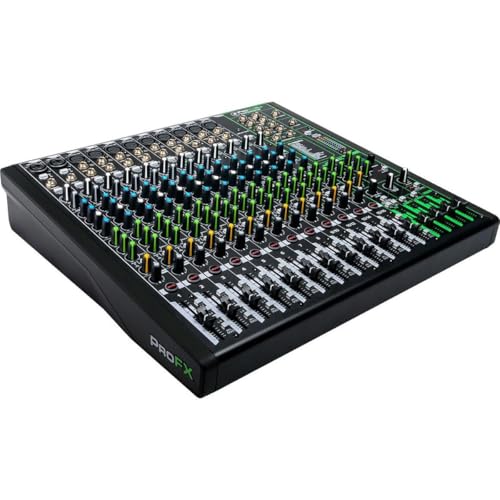
Mackie ProFX16v3 16-Channel USB Mixer
Best for: Live bands needing 16 channels and recording
- Channels
- 16-Channel (what this guide is about)
- Channel Count
- 16-channel
- Mixer Type
- Analog
- USB Audio Interface
- USB recording interface
- Built-In Effects
- 24 built-in effects
- Connectivity
- Bluetooth, USB
View on Amazon: Mackie ProFX16v3 16-Channel USB Mixer Affiliate link
The Mackie ProFX16v3 is a 16-channel mixer designed for venues requiring extensive inputs. It features Onyx preamps providing 60 dB of clean gain per mic channel. The unit includes 24 built-in GigFX effects and a USB audio interface for multitrack recording. This analog-focused device suits users who need physical controls without a digital learning curve. It allows simultaneous room mixing and recording.
Pros
- 16 input channels for large setups
- 60 dB clean gain on every mic channel
- 24 built-in GigFX effects
- USB recording interface for multitrack capture
Cons
- Heavier build at 19.7 pounds
- Larger footprint at 17.7 inches wide
- No dedicated display for effect parameters
Good fit if
- You need 16 channels for live bands
- You want physical knobs for quick adjustments
- You require simultaneous recording and playback
Skip if
- You prefer a compact travel mixer
- You need digital software integration
- You require Bluetooth connectivity
Verdict: The Mackie ProFX16v3 16-Channel Mixer fits professional live sound engineers who need extensive channel count and reliable analog control without digital complexity.
Specifications side by side
| Spec | Pyle 8-Channel USB Audio Mixer with Bluetooth | Mackie ProFX16v3 16-Channel USB Mixer |
|---|---|---|
| Channel Count | 8 Channel | 16-channel |
| Mixer Type | DJ Mixer | Analog |
| USB Audio Interface | Audio Interface | USB recording interface |
| Built-In Effects | 16Bit DSP Processor | 24 built-in effects |
| Channel Equalizer | 3-band EQ | not stated |
| Phantom Power | +48V | not stated |
| Channels | 8-Channel | 16-Channel |
| Connectivity | Bluetooth, USB Audio Interface, USB | Bluetooth, USB |
| Features | Effects, MP3 Player, 48V Phantom Power | Effects |
| Intended Use | not stated | Recording |
| Dimensions | 2.56 × 10.8 × 9.26 inches | 17.7 × 17.1 × 4.4 inches |
| Weight | 3.97 pounds | 19.7 pounds |
| Size | 8 Channel | 16-channel |
| Color | Black | Black |
| Model | PMXU83BT | 2057323-00 |
Frequently asked questions
Can an 8-channel mixer handle a full live band?
An 8-channel unit like the Pyle PMXU83BT is designed for smaller setups. It provides eight input channels, which works well for solo DJs or small ensembles. If you need to connect more instruments simultaneously, a 16-channel model is the better choice. The Pyle unit fits small gigs where wireless streaming and phantom power are priorities.
Do both mixers include built-in effects?
Yes, both the 8-channel and 16-channel options feature built-in digital effects. The Pyle PMXU83BT includes effects to enhance your audio. Similarly, the Mackie ProFX16v3 also offers effects. This allows you to process signals directly on the hardware without needing external plugins or processors during your performance.
Which mixer is easier to transport?
The 8-channel Pyle PMXU83BT is significantly more portable. It weighs just 3.97 pounds and measures 10.8 inches wide. In contrast, the 16-channel Mackie ProFX16v3 weighs 19.7 pounds and is much larger. If you are a mobile performer needing compact gear, the smaller Pyle unit is the practical choice.
Can I use these mixers with a computer?
Both units support computer connectivity via USB. The Pyle PMXU83BT features USB audio interface capabilities for digital audio transfer. The Mackie ProFX16v3 also includes USB connectivity. This allows you to record performances or integrate the mixer into a digital audio workstation setup for professional live sound engineering tasks.
Is Bluetooth available on both models?
Yes, both mixers include Bluetooth connectivity. The Pyle PMXU83BT offers Bluetooth for wireless streaming. The Mackie ProFX16v3 also lists Bluetooth in its connectivity options. This feature lets you stream audio wirelessly from your phone or tablet to the mixer for playback during your sets.
Which mixer is better for recording?
The Mackie ProFX16v3 is intended for recording applications. It provides sixteen channels, which is ideal for capturing multiple instruments simultaneously. While the Pyle unit is good for small gigs, the Mackie fits professional live sound engineers who need extensive channel count and reliable analog control for recording sessions.