6-Channel or 16-Channel DJ Mixers? Compared by Specs
As an Amazon Associate we earn from qualifying purchases. Links on this page are affiliate links.
Choosing between a 6-Channel vs 16-Channel audio mixer depends on your input needs. Both Mackie ProFX models are analog mixers with built-in USB interfaces and 24 effects. They share Onyx preamps and Bluetooth connectivity. The main difference is capacity. The six-channel unit suits small setups or content creation. The sixteen-channel version handles larger bands and complex venues. You must decide how many sources you need to mix simultaneously.
Key differences
| Aspect | Mackie 6-Channel Analog USB Mixer | Mackie ProFX16v3 16-Channel USB Mixer |
|---|---|---|
| Channel Count | 6 | 16 |
| Intended Use | Professionals | Recording |
| Dimensions (Length) | 7.5 inches | 17.7 inches |
| Weight | 1 pounds | 19.7 pounds |
Which one should you choose?
Choose Mackie 6-Channel Analog USB Mixer if
- You need to mix fewer than seven sources.
- You require a compact unit for portable setups.
- You prioritize a lighter device for frequent transport.
Choose Mackie ProFX16v3 16-Channel USB Mixer if
- You need to connect sixteen simultaneous inputs.
- You mix large bands in live venues.
- You require dedicated space for extensive routing.
Verdict: The six-channel mixer is ideal for solo creators or small ensembles needing portability. The sixteen-channel model fits larger groups requiring more input capacity. Select based on your maximum simultaneous source count.
6-Channel vs 16-Channel Mixer Specs
channel capacity
The Mackie ProFX6v3 offers six input channels, while the ProFX16v3 provides sixteen. You need to decide how many sources you plan to connect simultaneously. Six channels limit your setup to fewer microphones and instruments. Sixteen channels allow you to connect an entire band or multiple DJ decks. If you only need to mix a podcast or a small duo, the six-channel model is sufficient. For larger live performances or complex studio recording sessions, the sixteen-channel unit provides the necessary headroom and flexibility without requiring an external mixer.
physical dimensions
Size is a major practical difference between these two analog mixers. The ProFX6v3 is significantly more compact. Its dimensions are roughly 7.5 inches in length and 8.4 inches in width. The ProFX16v3 is much larger, measuring 17.7 inches in length and 17.1 inches in width. You must consider your available desk or rack space. If you travel frequently or have a small studio, the smaller footprint of the six-channel model is advantageous. The sixteen-channel mixer requires a substantial surface area and may not fit in portable cases designed for smaller gear.
weight
Portability depends heavily on the weight of the unit you choose. The ProFX6v3 weighs only one pound, making it extremely lightweight and easy to carry. The ProFX16v3 weighs 19.7 pounds, which is nearly twenty times heavier. You will feel this difference if you are moving equipment between venues or setting up in tight spaces. The lighter six-channel mixer is ideal for content creators who move around. The heavier sixteen-channel mixer is better suited for permanent installations where mobility is not a priority.
usb interface
Both units feature built-in USB audio interfaces, but the specifications differ slightly. The ProFX6v3 is listed as a 2x4 USB I/O system. This allows you to send two outputs to your computer and receive four inputs back for custom monitoring mixes. The ProFX16v3 is described simply as a USB recording interface. It supports multitrack recording and room mixing simultaneously. Both models enable high-quality 24-bit/192kHz recording. You need to check your specific software requirements to see if the 2x4 configuration of the six-channel model offers the specific routing benefits you need over the general interface of the larger unit.
connectivity
Connectivity options are identical for both mixers. Both the ProFX6v3 and the ProFX16v3 support Bluetooth and USB connections. This means you can stream audio wirelessly from your phone or computer to either mixer. You can also use the USB connection for power and data transfer. Since the connectivity specs are the same, your choice should not be based on wireless capabilities. You will get the same Bluetooth performance and USB functionality regardless of which channel count you select. This feature is standard across the ProFX series.
built-in effects
Both mixers include the same number of built-in effects. The ProFX6v3 offers 24 FX options, including reverbs and delays. The ProFX16v3 also includes 24 built-in GigFX effects. You can use these effects to enhance live vocals, instruments, or DJ tracks on either unit. There is no difference in the quantity or type of effects available in the specifications. You will have access to the same creative tools regardless of the mixer size. This spec does not influence your decision between the two models.
Which mixer fits your setup
Small band or duo needing few inputs
The six-channel ProFX6v3 handles up to six simultaneous sources. Its compact dimensions measure 8.4 inches wide and 7.5 inches long. Weighing only one pound, it is easy to transport. You get 60 dB of gain from the Onyx preamps. The 2x4 USB interface allows for custom monitoring mixes. This capacity is sufficient for small ensembles or solo performances.
Large ensemble requiring many inputs
The sixteen-channel ProFX16v3 supports up to sixteen simultaneous inputs. It measures 17.1 inches wide and 17.7 inches long. Weighing 19.7 pounds, it is built for stationary use. You still get 60 dB of gain on every channel. The built-in USB interface records multitracks while mixing the room. This high channel count suits full bands or complex live sound setups.
Creator needing portable recording gear
Portability is key for content creators. The six-channel model weighs one pound and fits in small bags. It records in 24-bit/192kHz quality via USB. You can blend computer output with direct mixer feeds. The 24 built-in effects add polish to your tracks. Bluetooth connectivity allows wireless audio streaming. This lightweight design is ideal for creators on the move.
Quick picks
| # | Product | Best for | Price |
|---|---|---|---|
| 1 | Mackie 6-Channel Analog USB Mixer | small live acts and content creators | Check price of Mackie 6-Channel Analog USB Mixer on Amazon |
| 2 | Mackie ProFX16v3 16-Channel USB Mixer | Large bands needing 16 inputs and USB recording | Check price of Mackie ProFX16v3 16-Channel USB Mixer on Amazon |
The products compared

Mackie 6-Channel Analog USB Mixer
Best for: small live acts and content creators
- Channels
- 6-Channel (what this guide is about)
- Channel Count
- 6-channel
- Mixer Type
- Analog
- USB Audio Interface
- 2x4 USB I/O
- Built-In Effects
- 24 different FX options
- Connectivity
- Bluetooth, USB
View on Amazon: Mackie 6-Channel Analog USB Mixer Affiliate link
The Mackie ProFX6v3 is a 6-channel analog mixer designed for live sound and content creation. It features two Onyx mic preamps with 60dB of gain and a 2x4 USB audio interface for 24-bit/192kHz recording. You get 24 built-in FX options and Bluetooth connectivity. This compact unit suits streamers and small live acts who need high-gain inputs and simple analog control without digital complexity.
Pros
- 2x4 USB I/O for 24-bit/192kHz recording
- Two Onyx mic preamps with 60dB gain
- 24 built-in digital FX options
- Bluetooth and USB connectivity
Cons
- Only 6 channels limit large setups
- Analog-only signal path
- No dedicated hardware display
Good fit if
- You need high-gain preamps for sensitive microphones
- You want simple analog control with USB recording
- You are streaming or creating content with one or two mics
Skip if
- You require more than 6 input channels
- You need full digital signal processing
- You require a built-in screen for monitoring
Verdict: Mackie ProFX6v3 6-Channel Analog Mixer is a focused tool for creators needing clean analog sound and high-gain preamps. It fits streamers and small live acts who prioritize recording quality over channel count.
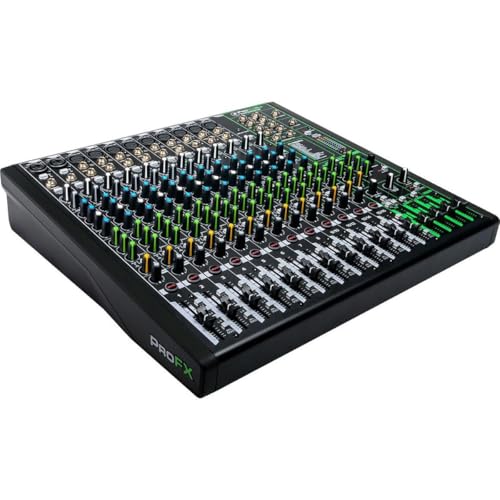
Mackie ProFX16v3 16-Channel USB Mixer
Best for: Large bands needing 16 inputs and USB recording
- Channels
- 16-Channel (what this guide is about)
- Channel Count
- 16-channel
- Mixer Type
- Analog
- USB Audio Interface
- USB recording interface
- Built-In Effects
- 24 built-in effects
- Connectivity
- Bluetooth, USB
View on Amazon: Mackie ProFX16v3 16-Channel USB Mixer Affiliate link
The Mackie ProFX16v3 is a 16-channel analog mixer designed for larger bands and venues. It features Onyx preamps with 60 dB of clean gain and a built-in USB recording interface. The GigFX engine provides 24 effects. You can mix room sound and record multitracks simultaneously. This unit measures 17.7 by 17.1 inches and weighs 19.7 pounds. It suits users needing high channel counts without digital complexity.
Pros
- 16 input channels for large setups
- 60 dB clean gain per mic channel
- Built-in USB recording interface
- 24 GigFX effects available
Cons
- Heavy 19.7-pound build
- Large footprint at 17.7 inches wide
- No dedicated display screen listed
Good fit if
- You need 16 channels for a full band
- You want to record multitracks via USB
- You prefer analog control over digital menus
Skip if
- You require a compact portable size
- You need fewer than 16 inputs
- You prioritize lightweight gear for travel
Verdict: The Mackie ProFX16v3 16-Channel Analog Mixer fits bands that need extensive inputs and simultaneous USB recording without a steep learning curve.
Specifications side by side
| Spec | Mackie 6-Channel Analog USB Mixer | Mackie ProFX16v3 16-Channel USB Mixer |
|---|---|---|
| Channel Count | 6-channel | 16-channel |
| Mixer Type | Analog | Analog |
| USB Audio Interface | 2x4 USB I/O | USB recording interface |
| Built-In Effects | 24 different FX options | 24 built-in effects |
| Channels | 6-Channel | 16-Channel |
| Connectivity | Bluetooth, USB | Bluetooth, USB |
| Features | Effects | Effects |
| Intended Use | Professionals | Recording |
| Included Accessories | Microphone | not stated |
| Dimensions | 7.5 × 8.4 × 2.9 inches | 17.7 × 17.1 × 4.4 inches |
| Weight | 1 pounds | 19.7 pounds |
| Size | 16-channel | 16-channel |
| Color | Black | Black |
| Model | ProFX16v3 | 2057323-00 |
Frequently asked questions
Can a 6-channel mixer handle a full live band?
It depends on the group size. The Mackie ProFX6v3 supports six simultaneous inputs, making it ideal for small live acts or duos. It is not designed for large ensembles that require more than six sources. For larger bands, you would need a unit with higher channel capacity.
What is the weight difference between the two models?
The six-channel Mackie ProFX6v3 weighs one pound. The sixteen-channel ProFX16v3 weighs 19.7 pounds. This significant difference affects portability. The lighter six-channel unit is easier to transport for mobile DJs or small venue gigs. The heavier sixteen-channel model is better suited for fixed installations.
Do both mixers offer Bluetooth connectivity?
Yes, both the ProFX6v3 and ProFX16v3 include Bluetooth. You can stream music from your phone or tablet directly to the mixer. This feature allows for easy playback of backing tracks or reference audio without needing additional cables or devices.
Are the physical dimensions significantly different?
The six-channel model measures 8.4 inches wide and 7.5 inches long. The sixteen-channel version is much larger at 17.1 inches wide and 17.7 inches long. You must ensure your workspace or rack can accommodate the larger footprint of the sixteen-channel unit.
Which mixer is better for USB recording?
The sixteen-channel ProFX16v3 is built for extensive recording needs. It allows simultaneous USB recording of multiple inputs, which suits large bands. The six-channel model also offers USB connectivity but is focused on creators needing clean analog sound rather than high channel count recording.
Do these mixers have built-in effects?
Yes, both units feature built-in effects. You can use these effects to enhance vocals or instruments during live performances or recordings. The specific effect types are not detailed, but the presence of effects adds versatility without requiring external processors.